This is Volume 3 of FutureShop's comprehensive guide to hi-fi cables and accessories, covering speaker cables in full. Browse our full speaker cable range or contact our team if you would prefer to discuss your system directly.
About This Guide
Speaker cables connect your amplifier to your speakers and generate more debate than almost any other component in a hi-fi system. This guide cuts through that noise by explaining the eight key variables that determine how a speaker cable will perform in your specific system. Read it in full or jump to the section most relevant to your current question. If you would rather talk it through, our technical advisors can apply all of these considerations to your exact equipment in minutes.
Quick Take: What This Guide Covers
- Conductor material: copper vs silver and why neither is universally better
- Conductor configuration: stranded vs solid, skin effect, and cable geometry
- Dielectric: how insulation material affects timing and signal loss
- Shielding: braided vs foil, coverage, and shielding material
- Length: why matching left and right cable lengths matters more than keeping them short
- Plugs: conductor core material, plating, and why plug width matters
- Termination: screwed, soldered, cold-weld, and sonic-weld compared
- Grounding: why higher-end cables address it and when it makes a difference
Vol. 3 - Speaker Cables
In this section of our guide, we will deal with what many people consider to be the central cable in a HiFi system: the speaker cable. This is the cable that runs from an amplifier to your speakers and is the cable that generates the most 'hype' and some controversy. But before we get into the materials and variables, it's important to note something that we will repeat throughout this section: there is no 'best' or 'perfect' cable for every system. The right cable for you depends entirely on your equipment, and there will definitely be very expensive cables that will make your system sound worse. Before going out and upgrading your speaker cables, it's vitally important that you have had your system for a little while and understand what you would like to improve about your listening experience. In an ideal world, you have addressed your power supply and eliminated as much 'noise' from your system as possible by allowing your power cables to burn in for up to 100 hours (which is a service we provide, for free, on many power cables). Now, it is time to turn your attention to speaker cables.
So, what should you look for in your search for the right cable? We will consider all the variables and how they can affect your experience.
Conductor Material
As we covered in the section on power cables, by far, the most common materials used as conductors in HiFi and AV applications are copper and silver because they are the most conductive metals (as you can see above). Unlike power cables, however, there is greater scope for using silver in speaker cables. Cable manufacturers will use different combinations of these materials to take advantage of their effects on sound. Because silver is the better conductor, it tends to do a better job of conveying higher frequencies, whereas copper generally performs better with lower frequencies. This means that silver can tend towards a more 'detailed' sound, and copper can have a 'warmer' sound. Although silver is obviously more expensive, neither is objectively better, so what will suit you depends on the characteristics of your system and your personal sound preferences. Used in a system that already provides a great deal of clarity, silver conductors could result in a 'bright', 'brittle' or 'harsh' sound. Conversely, an already 'warm' system with copper conductors could sound muffled or lack dynamism. Every manufacturer has a different philosophy regarding conductors, so ultimately, the best way to decide on what sort of cable to buy will still be to call our expert advisors, who will discuss your system, preferences and goals before recommending.
Conductor Configuration
The logic that applies to the shape and configuration of conductors in speaker cables will be very similar to that of power cables, although, for the most part, the conductors will have a higher gauge (slimmer) than the ones used for power. Cheaper cables, like those used for outdoor installations or very long runs, will still often contain stranded conductors because of their increased flexibility. However, higher-end cables will invariably feature solid conductors of various gauges because they are less susceptible to the 'skin effect' or 'strand interaction', the term used to describe the interaction of magnetic fields created by conductors. Twisting the conductors effectively mitigates the effects of their respective magnetic fields, as magnetic fields cancel each other out when the conductors cross each other at right angles. For this reason, many low and high-end cables will twist the positive and negative conductors around each other to reduce interference. When discussing these strategies, cable manufacturers will often talk about 'geometry', which refers to the very specific way conductors and other components are arranged within a cable.
Dielectric
The dielectric in a speaker cable performs very similar functions to that of the dielectric in a power cable. They are still tasked with providing structure and minimising interference and energy loss. The material used is important because many materials will retain some of the signal passing through the conductor and then release it back at random intervals, which can affect the timing and detail of the resulting sound.
The ideal dielectric would be air, but this is not a practical (or achievable solution). PVC is a common material used for dielectrics, but it is not the most effective. Polyethylene is more common in higher-end cables, and to benefit from the dielectric properties of air, many manufacturers choose to use 'foamed polyethylene,' which contains an amount of air that aids significantly in rejecting current. Teflon is widely considered to be the optimum dielectric material and is used in many high-end cables. Some manufacturers will charge the dielectric with current so that it is 'full' and cannot absorb any energy from the conductor.
Dielectrics and shielding, perhaps surprisingly, actually account for a significant portion of the cost of high-end cables, as this is often where manufacturers can extract significant changes in the quality of sound produced. With a range of speaker cables from a single manufacturer at different price and performance levels, you may see the same conductor used throughout, and it will be the other components which preserve the signal and improve performance.
Shielding
Shielding on speaker cables protects the signal from EMI (electromagnetic interference), which any modern home is filled with. The two main types of shielding are braided shields and foil shields. Both have their own advantages and disadvantages. While braided shields tend to be more flexible and durable, they do not provide 100% coverage of the conductor. Foil shields, on the other hand, can theoretically provide 100% coverage but are more delicate and require grounding. It is common to see a combination of both types of shielding on higher-end cables as manufacturers seek to combine their advantages and mitigate their weaknesses. It is also worth considering the materials used for the shielding: copper braid is the most common and offers good conductivity and flexibility, while aluminium foil is lighter and provides excellent coverage at lower cost. Some higher-end cables use silver-plated copper shielding, which combines the coverage advantages of foil with the superior conductivity of silver. As with conductors, the shielding material will have its own effect on the character of the signal passing through the cable, and it is one reason why two cables using the same conductor can sound noticeably different.
Length
The generally accepted wisdom on the length of speaker cables is that shorter is better. This is because the shorter the cables, the less opportunity for distortion, noise or interference to affect the signal. However, this is not an approach that works in every case. Some manufacturers will not produce cables at 0.5m or less because the technologies used in their cables (often ones concerning noise dissipation) need slightly longer runs to be effective.
While we would still recommend keeping speaker cables as short as possible, our main advice on speaker cable length is to keep the lengths of your cables to your left and right speaker as similar as possible. This is because drastic differences in lengths can result in timing issues and, therefore, negatively affect your system's performance. Our advice is that the shortest run of cable should be no less than half the length of the longest run; e.g. if your longest cable is 5m, your shortest should not be less than 2.5, with this logic applying to left & right speakers and central speakers. You can get away with a greater difference on entry-level and lower-mid-range systems, but the effect would be more noticeable on high-end systems, so we would recommend keeping the cable runs as similar as possible.
Plugs
An important thing to note when considering plugs for speaker cables is what the conductor in the plug itself is made from. Luckily, manufacturers of higher-end cables have usually thought this through and will use materials with high conductivity for the core conductor and the plating material. On higher-end plugs, the core will usually be pure copper. The use of substandard material in this application will undo much of the good work being done by the higher-quality wire that runs through your cable, which applies to both the core conductor and the plating material. While gold is commonly used to plate plugs because it is not susceptible to oxidisation and is considered a premium material due to its price, silver is the most conductive material, so it could be considered a superior material for plating.
It is also worth considering the size of the plug itself: a very narrow plug may mean that the dielectric and shielding that runs most of the length of the cable have to be stripped off to fit the conductor into the plug, meaning that the conductor is more exposed to interference. Better cables will feature wider plugs, which allow the dielectric and shielding to be encased by the plug, helping to keep the conductor and signal safe from external interference.
Termination
There are four main termination methods used in most audio cables:
- Screwed connections: good connection, but the least secure due to the potential for screws to loosen over time.
- Soldered connection: very secure because the conductor and plug are welded together, but introducing different materials in the solder can affect the overall resistance.
- Cold-welding: creates an airtight seal and 360 contact between the plug and the conductors. This process is generally considered to be a superior method but is not suitable for every conductor.
- Sonic welding: This is a relatively rare process that uses high-energy sonic waves that are capable of joining metals together at the molecular level. This provides a seamless transition from conductor wire to plug but is a very expensive process and does not seal the plug around the cable, meaning that it will need to be used in conjunction with another method, usually cold-welding.
Grounding
While not always considered important for signal cables as they do not contain an earth wire, many manufacturers have noticed the benefits of addressing grounding in some way to reduce noise in a cable, usually through introducing an earth feature to their cable. This feature will only appear in higher-end cables but has been proven to make a difference on high-end systems.
Speaker Cable Selector: Matching Cable Character to Your System
The guide above explains what each variable does. This table translates those variables into practical purchasing guidance. Identify the description that most closely matches your system or listening priority, and follow the recommendation to the relevant section of our range.
| Your situation | Conductor to prioritise | Technology to look for | Starting point |
|---|---|---|---|
| System sounds warm but lacks detail and top-end air. Cymbal decay sounds smeared. | Silver-plated or silver-core conductors | Aircore geometry; low-dielectric insulation (Teflon or foamed polyethylene) | Tellurium Q or QED Genesis Silver Spiral |
| System sounds bright or harsh. Strings are fatiguing. Treble feels prominent. | High-purity copper; avoid silver-plated designs | X-Tube or similar skin-effect management; polyethylene or Teflon dielectric | QED XT40i or XT400 |
| System is balanced but sounds closed-in. The soundstage feels narrow and instruments overlap. | Long-Grain Copper or OCC copper; semi-solid concentric construction | Concentric geometry; low noise floor design | AudioQuest Rocket 11 or QED Golden Anniversary XT |
| Long cable run (4m or more) or low-impedance speakers (4 Ohm or below). | High-purity copper with large cross-sectional area | Low-resistance design; X-Tube or Aircore geometry | QED XT40i or Chord Company Clearway |
| High-end system. Timing, coherence, and natural tonal accuracy are the priority. | Specialist copper formulations; proprietary conductor geometry | Phase-distortion management; directional construction | Tellurium Q Black or Silver family |
| Not sure. System works but you want the best possible upgrade at a realistic price. | Contact our team. System-specific advice is always more reliable than a general answer. | Call 0800 772 3688 or email sales@futureshop.co.uk | Browse all speaker cables |
Once again, that's quite a lot of information to digest, but we hope it has helped break down all the variables and let you know what to look for in the reams of technical information many manufacturers provide. There is rarely a definitive 'best' thing in any of these categories, as it always depends on your setup, expectations and budget. Luckily, our expert technical advisors can take all of these things into account in a matter of minutes, so if you are looking for advice specific to you, we would still suggest calling our Service Desk at 0800 772 3688 or 0208 905 1555 (if calling from outside the UK use +44 208 905 1555).
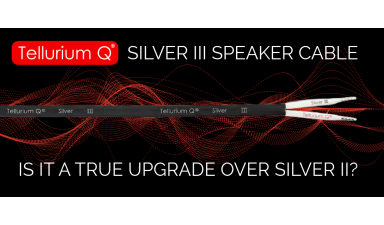
For practical comparisons of specific cables covered in this guide, our AudioQuest Rocket 11 vs QED XT40i comparison applies these principles directly to two of our most popular cables. And for a deeper look at a specialist copper approach, our Tellurium Q speaker cables review covers what a proprietary conductor philosophy sounds like in practice.
FutureShop stocks speaker cables from AudioQuest, QED, Tellurium Q, Chord Company, and more, all available in custom lengths and terminated to order. Our free cable burn-in service is available on most speaker cables, and every cable carries our 60-day money-back guarantee. Get in touch for free expert advice.