FutureShop is an authorised dealer for iFi Audio. This review covers the original iFi ZEN Blue (first generation). The current model is the ZEN Blue 3, which adds Bluetooth 5.4, aptX Lossless, three operation modes (RX, TX, and wired DAC via USB-C), and separate chipsets for Bluetooth, DAC, and Op-Amp stages. The review is retained in full as an account of the ZEN Blue's original character and a useful reference for anyone considering the ZEN Blue 3 or the broader ZEN ecosystem.
Our Verdict
The original iFi ZEN Blue established that a Bluetooth receiver for a hi-fi system could be built solidly, operate simply, and cover every useful codec in a single unit. Its key qualities, including broad codec support, balanced 4.4mm output, optical and coaxial digital outputs, and the characteristic iFi no-fuss connectivity, carry forward into the ZEN Blue 3, which adds aptX Lossless for true lossless Bluetooth and a wired DAC mode via USB-C.
Quick Take
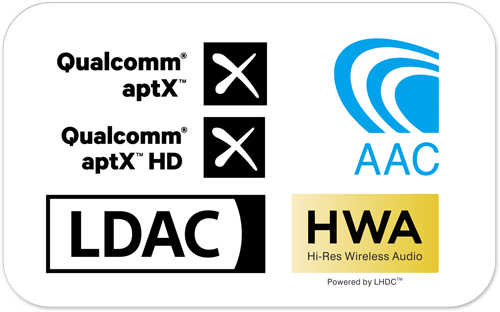
- Qualcomm QCC 5100 chipset. Bluetooth 5.0 with AAC, aptX, aptX HD, LDAC, and HWA codecs. Front panel LED indicates both connection status and active codec tier via colour.
- Outputs: RCA phono, 4.4mm balanced line (see the warning below: not for headphones), TOSlink optical, and coaxial digital. Rear mechanical switch selects analogue or digital output. Supports up to 7 paired devices.
- Codec indicator colours: yellow for AAC (entry-level), blue for aptX/aptX HD, and white for 88.2 or 96kHz source rates. The colour tells you at a glance what quality of signal is arriving.
- Bus-powered from a 5V DC wall adapter (included). Upgrading to an iFi iPower or iPower 2 is recommended for optimum performance.
- Important: the 4.4mm balanced output is a line output for connection to an amplifier or active speakers via an XLR breakout cable. It is not a headphone output. Do not connect balanced headphones to it.
- The ZEN Blue 3 is the current model. It adds Bluetooth 5.4, aptX Lossless for true lossless CD-quality, and a wired USB-C DAC input mode. See the upgrade note below.
Blue for You?
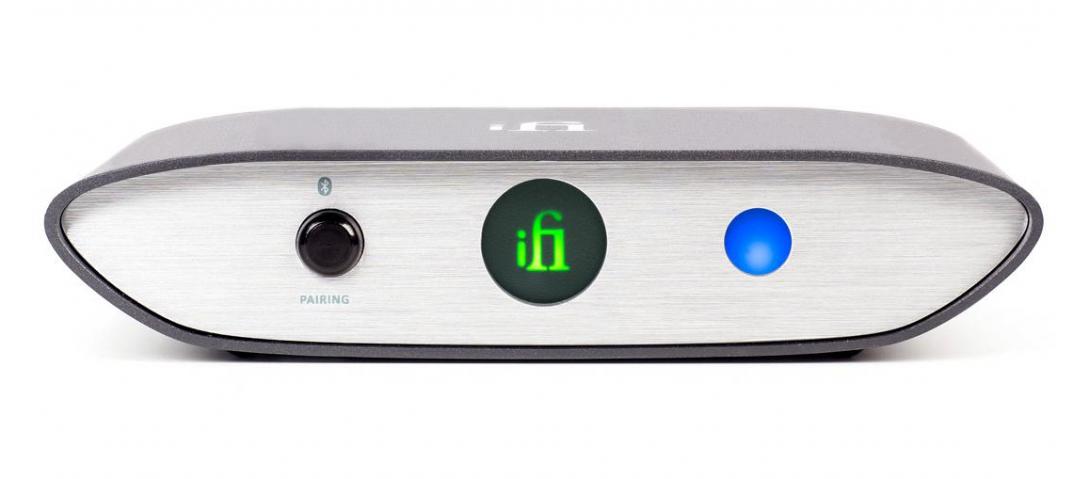
The new iFi ZEN line currently consists of two alternatives with very different use cases. The ZEN DAC reviewed elsewhere does exactly what it says on the tin, the more enigmatic Zen Blue is… a Bluetooth receiver. Not so enigmatic after all maybe, but like the ZEN DAC it aims to be the best at what it does at a ridiculously competitive price point. It shares the attractive retro stylings of its partner with an even more uncluttered front panel, just bearing a connection button, a Bluetooth connection status indicator and a sample rate indicator.
So whereas the ZEN DAC is all about being tethered to your computer (or even phone!), the ZEN Blue is all about being unconnected to its musical source, but usefully connected to your musical playback system. As such it needs a power connection and a 5V switched mode wall-wart is included. You have the option of changing this for an iFi iPower or an iPower 2, which would always be the way to go for optimum fidelity. Also included is a pair of interconnects, and a white plastic antenna, which you really should use, sticking up vertically as per the on-box pictures.
Accordingly, there is a healthy spread of connection options on the rear of the unit, enabling you to connect to old analogue systems or modern digital systems and AVRs. In common with the ZEN DAC, we have the possibility of a 4.4mm balanced output for your XLR breakout cable. (There is strong advice in the getting started card included to NOT connect your balanced headphone setup to this balanced output for fear of damage). Then we have the standard analogue phono outputs, a mechanical switch for the choice of analogue or digital output and then the choice of TOSlink or co-axial digital connection.
| TECHNICAL SPECIFICATION | |
|---|---|
| Chipset: | Qualcomm QCC 5100 Series |
| Input: | Bluetooth 5.0 with AAC, aptX, aptX HD, LDAC, HWA codecs |
| Output: | Optical/Coaxial, Audio RCA L/R, 4.4mm Balanced Lineout |
| Power Source: | DC 5V |
| Dimensions: | 158 (l) x 100 (w) x 35 (h) mm |
| Weight: | 476g (1.05 lbs) |
Bluetooth Codecs and Connectivity
The real extent of the flexibility provided by the ZEN Blue is in the wide variety of Bluetooth codecs it supports. As you may well be aware there is frustration in the walled garden of Apple-dom with the limitations we are stuck with given Apple's current insistence on the aged aac Bluetooth codec. This stymies any pretence of getting near to lossless playback capability over Bluetooth. Thankfully other providers are more open and the Zen Blue accommodates the prevalent Apt-X and Apt-X HD options, and LDAC (capable of lossless CD resolution) and HWA (aka LHDC) codecs are supported via firmware update. At the top of the tree (for some reason) is SBC, which gets the green indicator in the iFi window.
Having tried some of the more plastic Bluetooth receiver options the solidity of the ZEN Blue, and the simplicity of its operation is a wonderful thing. On initial use, the sampling rate indicator will flash alternately blue and red until you make the first of your possible 7 different connections. Using an iPhone for that entry-level 'aac' connection is simply a matter of connecting to 'iFi Hi-Res Audio' in the phone's Bluetooth settings. From that point, keeping it simple at one sole connection, on rebooting the device we are greeted with the cheery tones (of, we suspect, the lovely Victoria Pickles of iFi Marketing fame) announcing over the audio connection what is connected and via what transport mechanism (so 'aac' in our case).
The codec indicator glows at the entry-level yellow for aac, and the sampling rate indicator shows blue. (It is white for source sampling rates of 88.2 or 96 kHz). All of this stuff is great as there is nothing so annoying for us tweakers as not being told what 'strength' we're currently working at.
Listening
At this level of connection sticking on the aac train by using Apple Music can result in a bit of a drab sound. I tried 'A Farewell to Kings' by Rush but it wasn't as inspiring as it should be. Upping the game by selecting New Order's 'Regret' in the new-ish Amazon Music HD 'Ultra HD' format (24/96 to you and me) results in a much more musical rendition, with all of that guitar detail sitting on top of those magisterial bass swoops. The same version of the same track from Qobuz elicited similar results. I guess the moral is, despite the curtailing of the signal due to Apple's whims, higher-quality input results in better output nonetheless. Or if you're wiser than me, just don't use Apple.
So just as the ZEN DAC is the best in the business for cost-effective format coverage, the Zen Blue is a robust and broadly capable Bluetooth interface for your hi-fi that just works. Just what you need.
The ZEN Blue Family: Where the Range Stands Now
This review was written at the original ZEN Blue's launch. Two things are worth noting for anyone using it to inform a current purchase.
On Apple and AAC: The review's frustration with Apple's AAC limitation is accurate for the time it was written, and remains partly true. Apple devices still use AAC as the default Bluetooth codec. However, Apple introduced lossless Bluetooth audio via the Apple W2 and H2 chips in AirPods and select Apple devices from 2024 onwards. For Android users pairing with the ZEN Blue 3 via aptX Lossless or LDAC, true lossless or near-lossless Bluetooth is now achievable. The hierarchy the review describes (AAC at the bottom, aptX HD and LDAC higher up) remains valid, but the ceiling has risen considerably with the ZEN Blue 3.
How the ZEN Blue 3 compares to the original reviewed here:
| Original ZEN Blue (this review) | ZEN Blue 3 (current model) | |
|---|---|---|
| Bluetooth version | Bluetooth 5.0 | Bluetooth 5.4. Better range stability and lower interference in congested environments. |
| Highest codec tier | aptX HD (LDAC and HWA via firmware update) | aptX Lossless: true lossless CD-quality transmission with zero data loss. Hi-Res 96kHz via LDAC and LHDC/HWA also supported as standard. |
| Operation modes | Bluetooth receiver (RX) only | Three modes: Bluetooth RX (receive), Bluetooth TX (transmit to Bluetooth headphones from a source), and wired DAC via USB-C input. The transmit mode is new and useful for sending audio from a non-Bluetooth source to wireless headphones. |
| Chipset architecture | Single Qualcomm QCC 5100 chipset | Separate Bluetooth, DAC, and Op-Amp chips. The dedicated chipset separation reduces cross-interference between stages and is the main driver of the V3's sonic improvement over the original. |
| Balanced output | 4.4mm balanced line output (not for headphones) | 4.4mm balanced line output retained. Warning about not connecting balanced headphones also carries forward. |
| Digital outputs | TOSlink optical and coaxial S/PDIF | Optical and coaxial retained. |
| Low-latency mode | Not available | Added for TX mode: ensures audio/video sync when transmitting to wireless headphones during video or gaming. |
For readers who want the full current specification, see the ZEN Blue 3 product page, or browse the full iFi ZEN range. The companion review of the original ZEN DAC is available in our Zen of Formats article, which covers format handling and listening in the same format as this review. And for iFi's reference-class headphone amplifier at the opposite end of the range, our iFi iCAN Phantom review covers a very different brief entirely.
The iFi Audio ZEN Blue 3 is available now at FutureShop, alongside the full iFi ZEN range. Not sure whether the ZEN Blue 3 suits your system, or how to get the best from it? Get in touch with our team for free expert advice.
 Click here to download a PDF version of this review