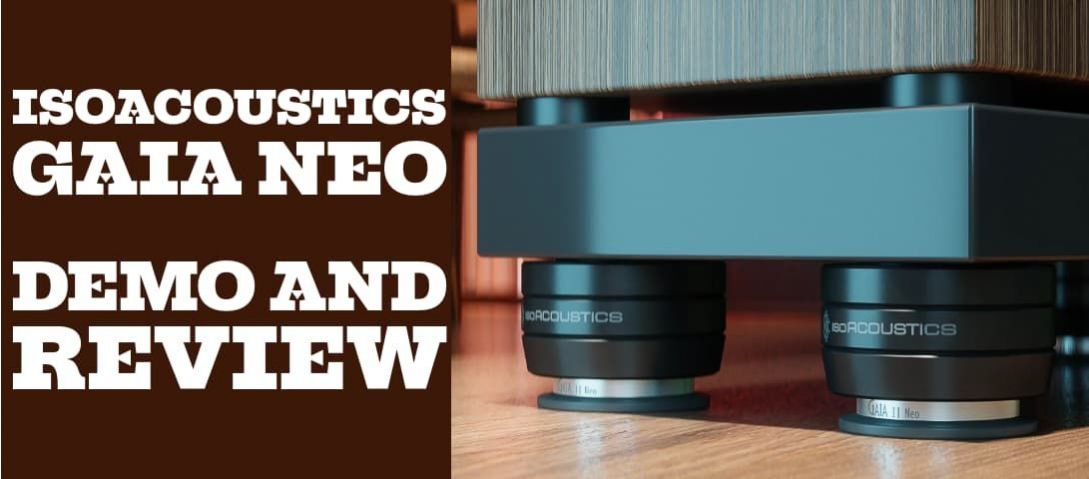
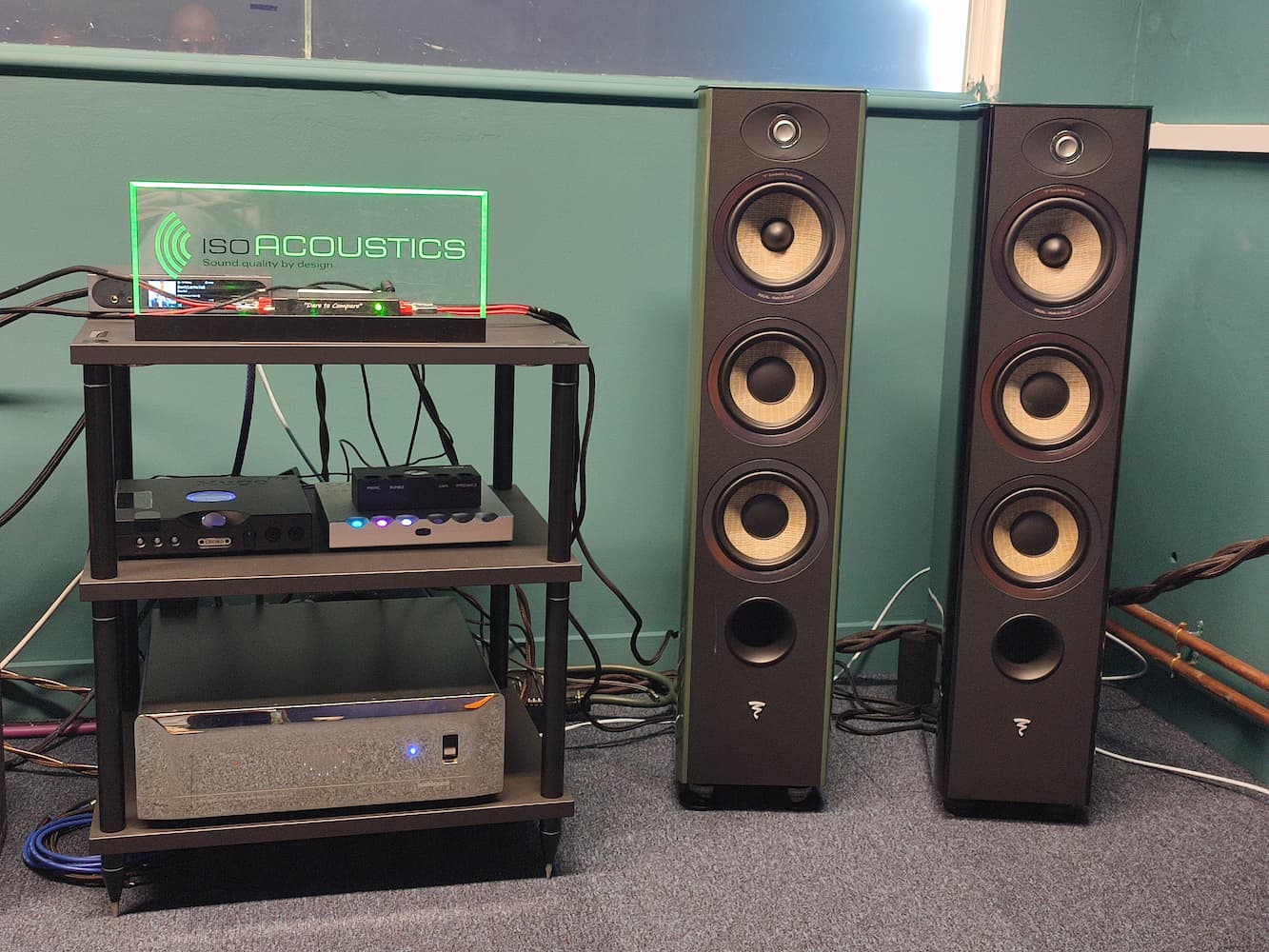
FutureShop has been a reference dealer for IsoAcoustics since 2019. This review was conducted using two pairs of Focal Aria Evo X speakers run simultaneously in our demo room: one pair fitted with the original GAIA, one with the GAIA Neo. Source: Tidal streaming via Matrix Audio Mini-i Pro 4, Chord Electronics M Scaler, and Chord Electronics Hugo TT2. Amplification: Ayre V-5 power amplifier. Switching between the two speaker pairs was handled by a custom-built speaker switch, allowing instant A/B comparison at the press of a button. Written by Stevyn Durham, who regularly tests speaker isolation, hi-fi upgrades, and system-matching products at FutureShop.
Our Verdict
The IsoAcoustics GAIA Neo is a genuine improvement over the original GAIA, delivering tighter bass, greater clarity, and significantly easier installation, making it the natural choice for any serious hi-fi system.
Quick Take
- The GAIA Neo delivers tighter, better-focused bass and greater overall clarity than the original GAIA
- Installation is significantly easier: height adjustment is possible with the speaker already upright, with no spanner required
- Floor sliders for both hard floors and carpet are included in the box, a useful addition the original GAIA lacks
- The original GAIA has a fuller, warmer low end that some listeners may prefer for certain music or room types
- At a 50% price premium over the original, the Neo is the stronger performer for systems where bass control and clarity are the priority
How do you make a speaker float? No, you don't drop them into a cream soda with two scoops of vanilla ice cream. Alex has been with IsoAcoustics throughout many of its changes and confidently dropped by to demonstrate the evolution of its popular GAIA isolation system: the GAIA Neo.
The original GAIA have been Future Shop's staple solution for speaker isolation since we first took them on 8 or 9 years ago. The GAIA Neo were a surprise advance in IsoAcoustics' already highly effective design, so we were keen to find out how much closer to actual levitation the Neo version can get.
IsoAcoustics is a Canadian manufacturer specialising in acoustic isolation products for speakers and hi-fi equipment. Their GAIA series — threaded isolation feet designed to decouple floor-standing and bookshelf speakers from the floor — has become one of the most widely recommended acoustic accessories in hi-fi.
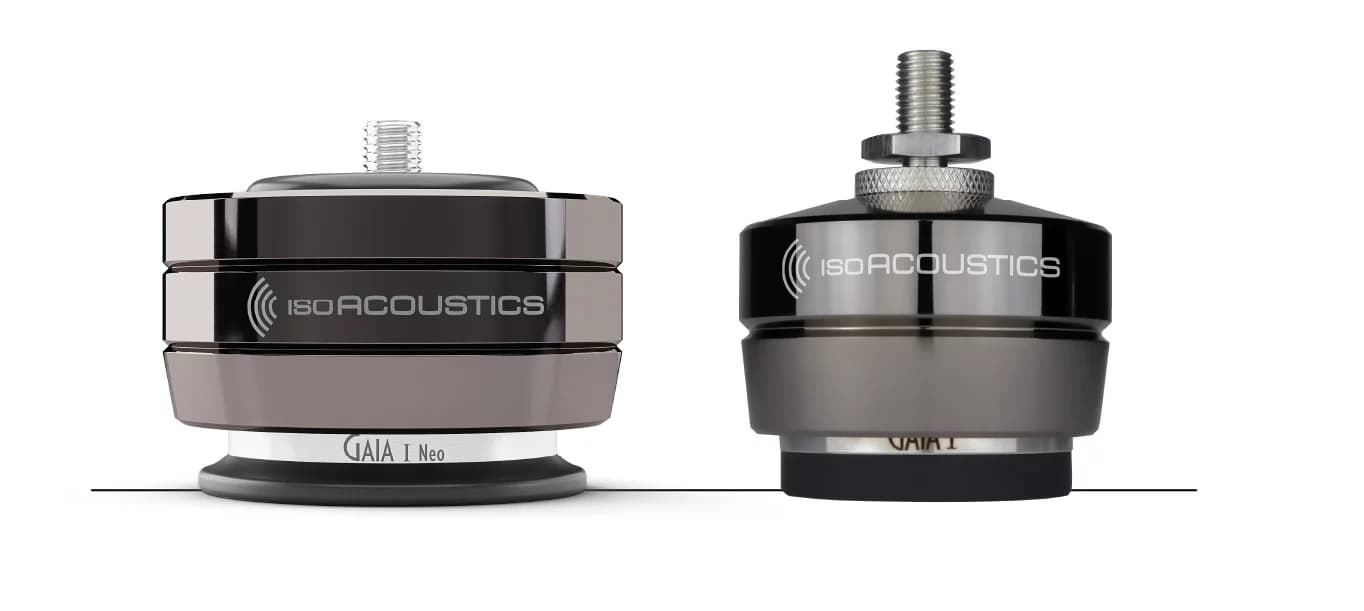
GAIA Neo vs Original GAIA: At a Glance
| GAIA Neo | Original GAIA | |
|---|---|---|
| Price (set of 4) | From £299 | From £199 |
| Internal isolator | Higher-density Sorbothane, tuned shape & durometer | Standard Sorbothane isolator |
| Installation | Integrated O-ring flush-fit; height adjustable while speaker is upright | Two-nut spanner adjustment required |
| Floor sliders included | Yes (hard floor & carpet variants) | No |
| Sound character | Crisp, controlled, better-focused bass | Fuller, more intimate low end |
| Best suited to | Systems where clarity and bass control are the priority | Listeners who prefer a warmer, more rounded presentation |
What's New in the GAIA Neo?
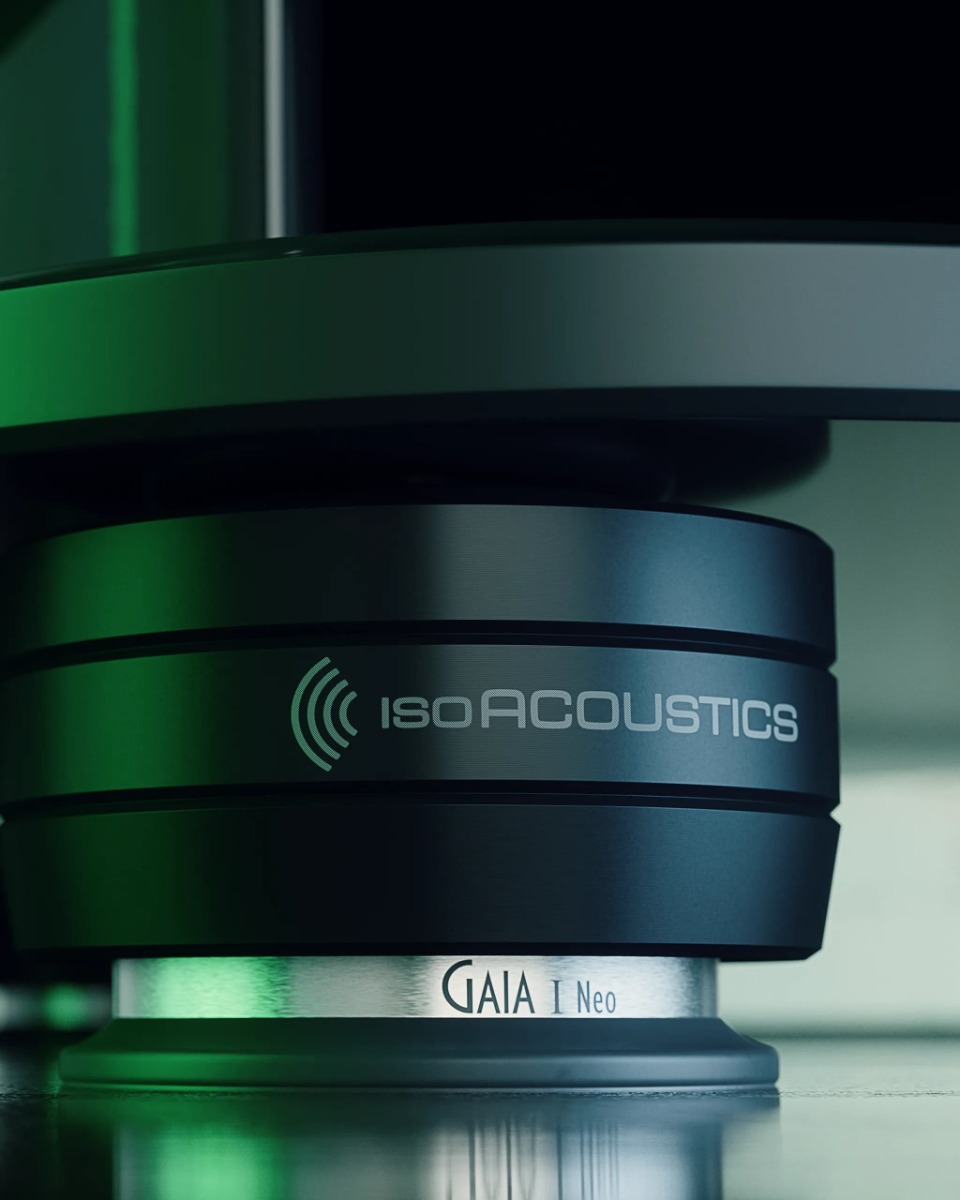
In short, the GAIA Neo improves on the original GAIA design, adding:
- Improved acoustic performance via higher-density Sorbothane internal isolators
- Intuitive height adjustment, to dial in speakers while already standing
- Easy flush-fit installation with integrated O-ring
- Floor-Sliders included for simple repositioning of speakers after fitting
Let's elaborate. How has performance been improved? Answer: with adjustments to shape, thickness, and durometer. Durometer – you know what that is, right? Excellent guess: it's a measure of hardness in materials like rubber, plastic, and elastomers. The Sorbothane material buried inside each GAIA, has been tuned to enhance the effect – it's a higher-density material. On top of that (literally), the Neo couples with the speaker with large Sorbothane O-rings that compress as each foot is screwed in place.
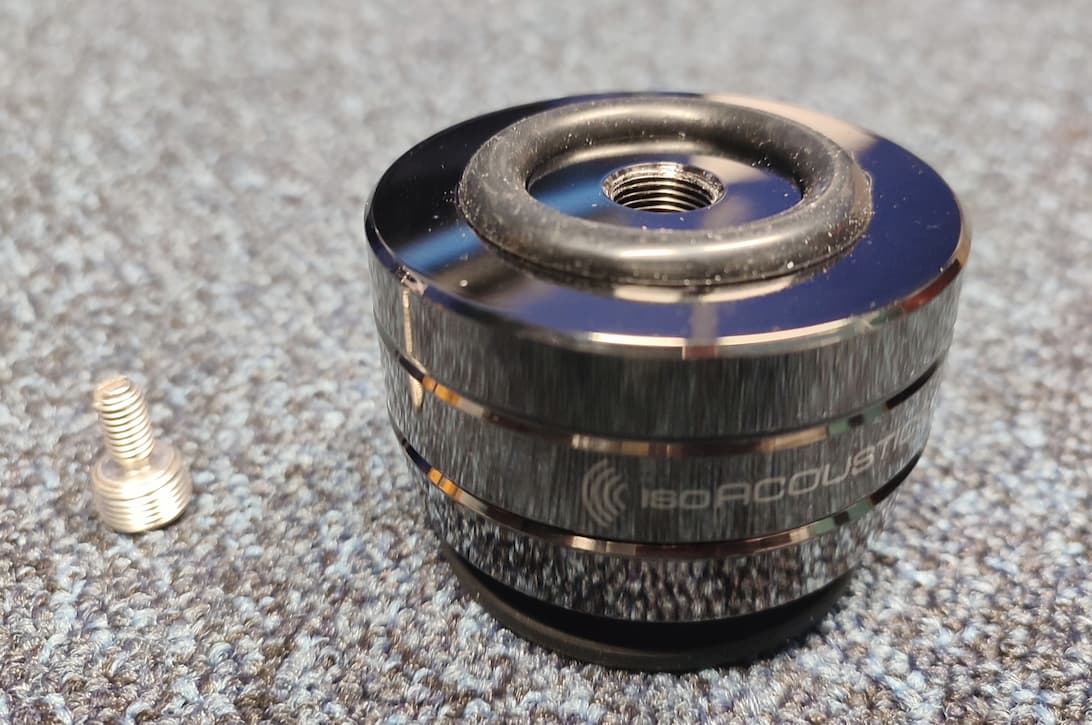
As with the originals, custom thread adaptors are available to pair the GAIA Neo with your speakers.
If you don't already know, a GAIA foot is installed with the logo front-facing. The reason is that the internal Sorbothane material is oval-shaped to handle speaker cone movement efficiently. Improved installation is where the Neo outdo the originals. Because of the O-ring's squishy property, the GAIA Neo can be screwed in just perfectly, maintaining a good grip on the speaker cabinet. Once the speaker is upright on all four feet, it's remarkably easy to rotate the lower segment to adjust the height and level your speaker perfectly.
The older model requires the balancing act of adjusting two nuts with a spanner to level all four feet.
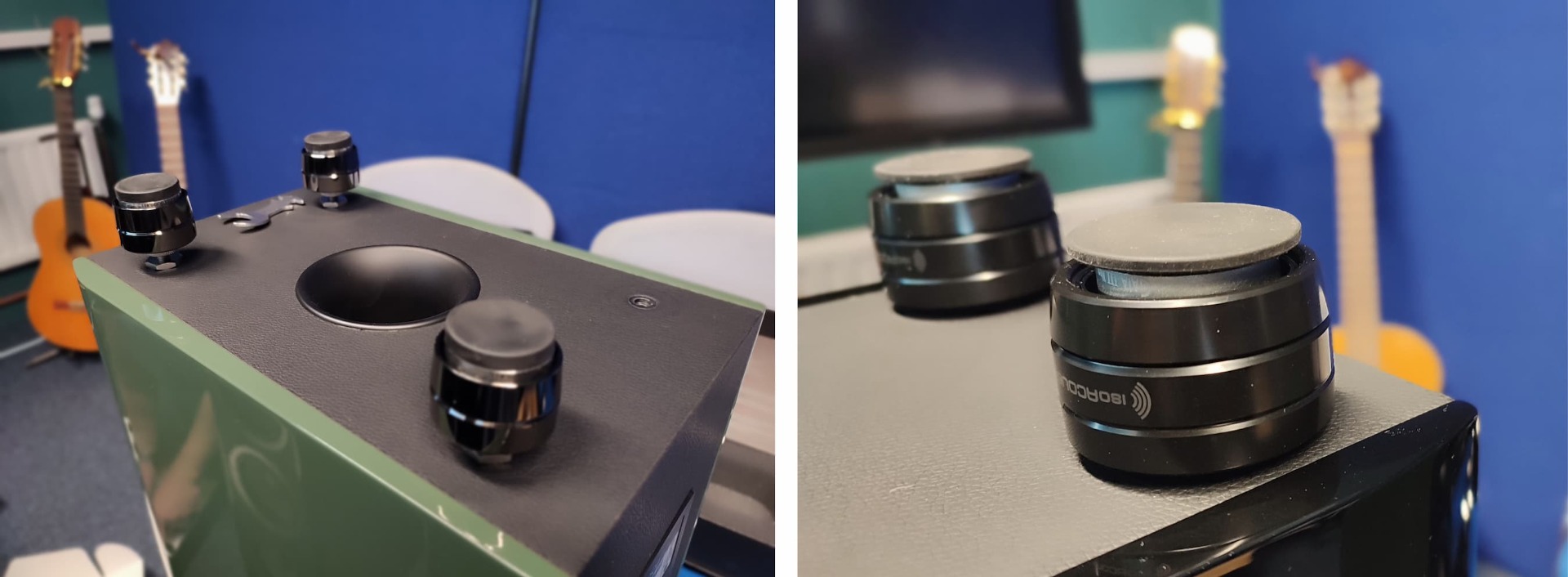
Another nice touch is the inclusion of floor sliders – two types: for hard floors or carpets – to place under each foot. These allow you to slide the speaker perfectly into its optimal alignment. To remove them, carefully rock the speaker onto two feet (without it tipping over and crushing anything or anyone), and retrieve the two free sliders.
But, at a 50% premium over the originals, it's the performance that needs to count. Alex had an ingenious method of demonstrating this . . .
Switching It Up: Side-by-Side Listening Test
Two pairs of Focal Aria Evo X were robo-lifted up the stairs to our demo room, unboxed and fitted, one set with GAIA Neo, one set with the original GAIA. Each pair were aligned in a staggered fashion and connected to a comparator unit built by IsoAcoustics with matching cables (we had the comparator connected to our amplifier with Chord Epic XL cables).
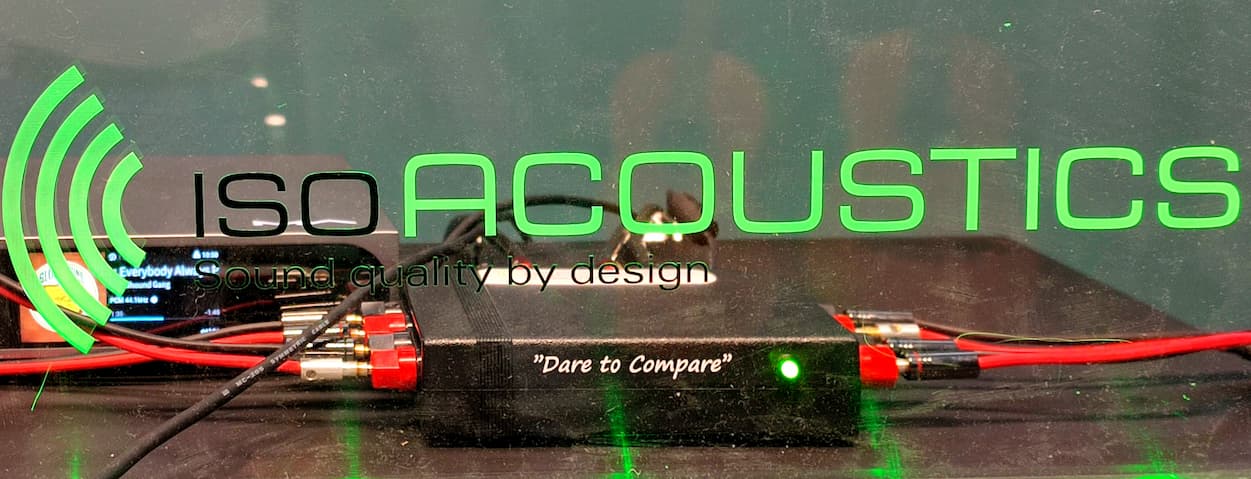
At the press of a button, the logo turns green, and we hear the Neo. Press again, and we hear the originals. A very convenient way to hear how very differently the two GAIA affect speaker performance. This was going to be fun, so we chose a range of music.
Cleo Sol — Don't Let Me Fall
First on was Cleo Sol's Don't Let Me Fall. The vulnerability in her laid-back song staged a deceptively serene scene to settle into, and feel the changes. The GAIA Neo gave the song more 'air' to float in. But the change in bass was what struck us the most – much more controlled and textured than with the original GAIA. Switching back to the originals, however, did give this track more intimacy with the perceived fuller low end; back on the Neo, the music felt more distanced.
James Blake — Limit to Your Love
With bass being a standout feature, the next tune chosen was James Blake's low-end demo staple, Limit to Your Love – a bass line to shake your cuppa off the table. It's a minimal track: piano, vocal, fat, heavy bass line. The piano and vocals became clearer and more rigid, with immersive tails; the bass tightened up significantly. A cup of tea did end up on the floor – not because the bass lost control – one of us got excited and dropped it. We soaked it up with a rag and got on with the next song.
John Summit — Stay with Me
For pace, we streamed Stay with Me by John Summit. The Neo brought out the snappy drum 'n' bass track's energy; on the original GAIA, the sound filled out but lost its snap. We began to realise that both GAIA had their own separate qualities.
Fontaines D.C. — Romance
Fontaines D.C.'s Romance was chosen for its dark, brooding atmosphere. On the Neo, the track had all the menace and drama the band intended. The concluding drop made a firmer impact on the Neo; on the originals, the track got a little too cuddly. But wait. Cuddly is no bad thing. How about playing something prettier?
Kina Grannis — Can't Help Falling in Love
Realising we were wandering down a murky rabbit hole, we made an about turn and listened to Kina Grannis interpret Can't Help Falling in Love. It's just Kina, her gentle guitar and a string quartet. Both the GAIA had something to offer the track. Yes, the Neo did fill out the midrange, but the originals had a directness, making the track more intimate.
Being able to switch the two at the flick of a switch made the comparison night and day. There was no doubt about how acoustics were affected by the two designs.
Why Does Isolation Change the Sound?
The GAIA Neo and original GAIA isolation feet are clearly different performers. The team found favour in both. Preference is a factor.
The Neo was crisp and clear, while the original GAIA had more guts. This is a common perception with hi-fi improvements; when noise, interference and resonance are reduced, the perception is that bass gets lost. Not true – the bass is still there, it's just better focused. Let's briefly explain . . .
Rooms have resonances: windows, doors, furniture, heaters, the other speaker, etc., all vibrate with the soundwaves. Notice the guitars in our photos? When the music stopped, we heard the guitars ringing. Objects in the room all resonate (on top of around 50-80% of sound being reflected). These resonances smear the source sound from speakers – this is called frequency masking, in the trade. Good isolation reduces the masking and clarifies the sound; therefore, a kick drum will sound tight and punchy, not rounded and loose. There may be instances where the looser, rounded sound is preferable, but this comes down to the individual.
Final Verdict: Should You Upgrade to the GAIA Neo?
Although different and, to some degree, preference-based, ultimately, the GAIA Neo are a clear improvement over the original GAIA. If you value bass precision, instrumental clarity, and easier setup, the Neo is the stronger performer. If your system or listening preferences lean towards warmth and intimacy, the original GAIA remains an excellent — and more affordable — option.
Either way, both represent some of the best value in speaker isolation available today, backed by our 60-day money-back guarantee.
If you are thinking about wider system improvements, our guide to whether hi-fi mains power cables make a difference is a useful next step for anyone optimising their system from the ground up. And if you are considering cabling alongside isolation, Part 5 of our Hi-Fi Upgrade series covers connectivity and cabling in full.
Both the IsoAcoustics GAIA Neo and IsoAcoustics GAIA are available now at FutureShop, backed by our 60-day money-back guarantee. Not sure which is right for your system? Get in touch with our team. As an IsoAcoustics reference dealer since 2019, we are happy to help.