FutureShop has been a reference dealer for Tellurium Q cables since 2011. This review was conducted on our in-house reference system: Ayre V-5 power amplifier, Ayre K-5 pre-amplifier, Ayre C-5 CD player, and B&W 803 speakers. Cable burn-in was performed on our Nordost Vidar burn-in machine.
Our Verdict
The Tellurium Q Silver III is a meaningful step forward from the Silver II, delivering greater soundstage scale, dynamic expression, and a more transformative response to burn-in, while the Silver II remains a genuinely musical and refined cable in its own right.
Quick Take
- The Silver III is more expressive and three-dimensional out of the box; the Silver II is smoother and more contained
- Both cables benefit significantly from burn-in, but the Silver III undergoes a more dramatic transformation
- The Silver III excels with dynamic recordings, delivering greater scale, transient detail, and soundstage depth
- The Silver II suits relaxed, long listening sessions where warmth and composure take priority
- Physically near-identical, with only small differences in weight and dimension separating the two
- The Silver III has inherited the best traits of the Silver II and the Black II, making it a strong candidate for a crowd-pleaser in the Tellurium Q range
Apart from their now-fabled sound, what we love most about Tellurium Q's speaker cables is that we don't know why. Why they keep their cable designs as secret as Juliet keeps Romeo's phone number is of no concern. All we need to do is listen.
It doesn't matter whether it's made with a metalloid element situated between selenium and polonium in the periodic table. If it sounds good, it's good.
Same cable, different name? Looks like we've got another mystery on our hands
My glasses, I can't see without my glasses . . . Found them.
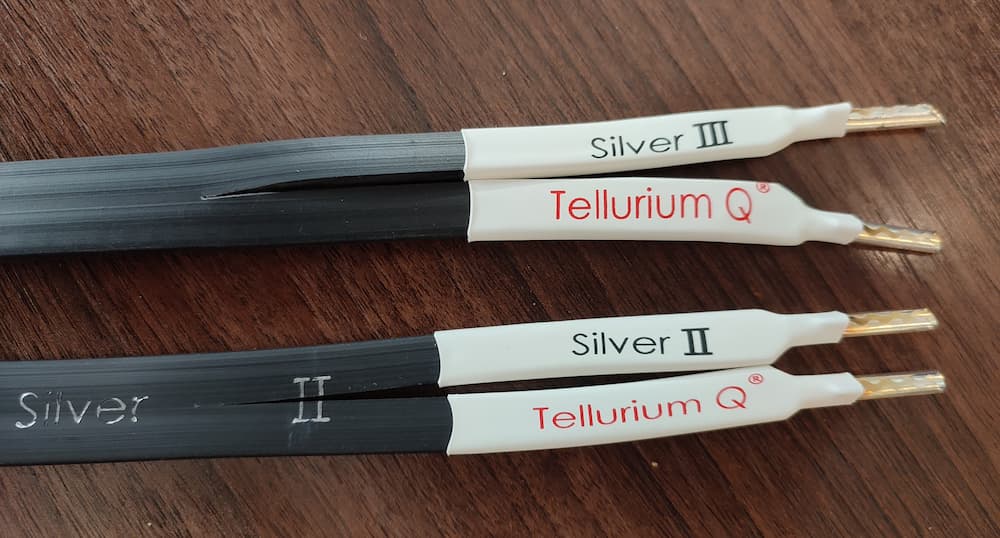
At a glance, they appear the same – an inch-wide strip of black plastic, encasing two tracks of whatever conducting material they use. The conductors are terminated with the same silver banana/BFA plugs, with branded white heat-shrink over them. The printing is the same; in fact, if you rubbed off the Roman I, you might think you're seeing double.
Zoinks!
Like Velma says, "There's a very logical explanation for all this." So, we got our tools out.
| Silver II | Silver III | |
|---|---|---|
| Weight (2m length) | 0.24 kg | 0.26 kg |
| Thickness | 3.6 mm | 3.8 mm |
| Width | 16.2 mm | 16.7 mm |
| Termination | Silver banana/BFA | Silver banana/BFA |
| Character | Smooth, refined, composed | Expressive, dynamic, expansive |
| Soundstage | Contained, intimate | Expansive, three-dimensional |
| After burn-in | Refinement | Transformation |
| Best suited to | Relaxed, long listening sessions | Engaging, immersive systems |
Not exactly night-and-day differences in construction – but in the hi-fi world, sometimes the smallest shifts can be where the story is hiding.
There may be more hidden within the unassuming black strips, but the only way to find out was to play some music through them.
Sibling rivalry – Silver III vs Silver II
Is there an ethical issue pitting one sibling against the other? Favouring one sibling over the other leads to all sorts of conflicts, so let's tread carefully. It shouldn't be about who's better but what's different.
Excited, we began listening before burning in the cables on our Nordost Vidar machine (Tellurium Q cables benefit highly from the full burn-in process). Don't worry, we did conduct before-and-after tests.
First Impressions – Out-of-the-Box Sound
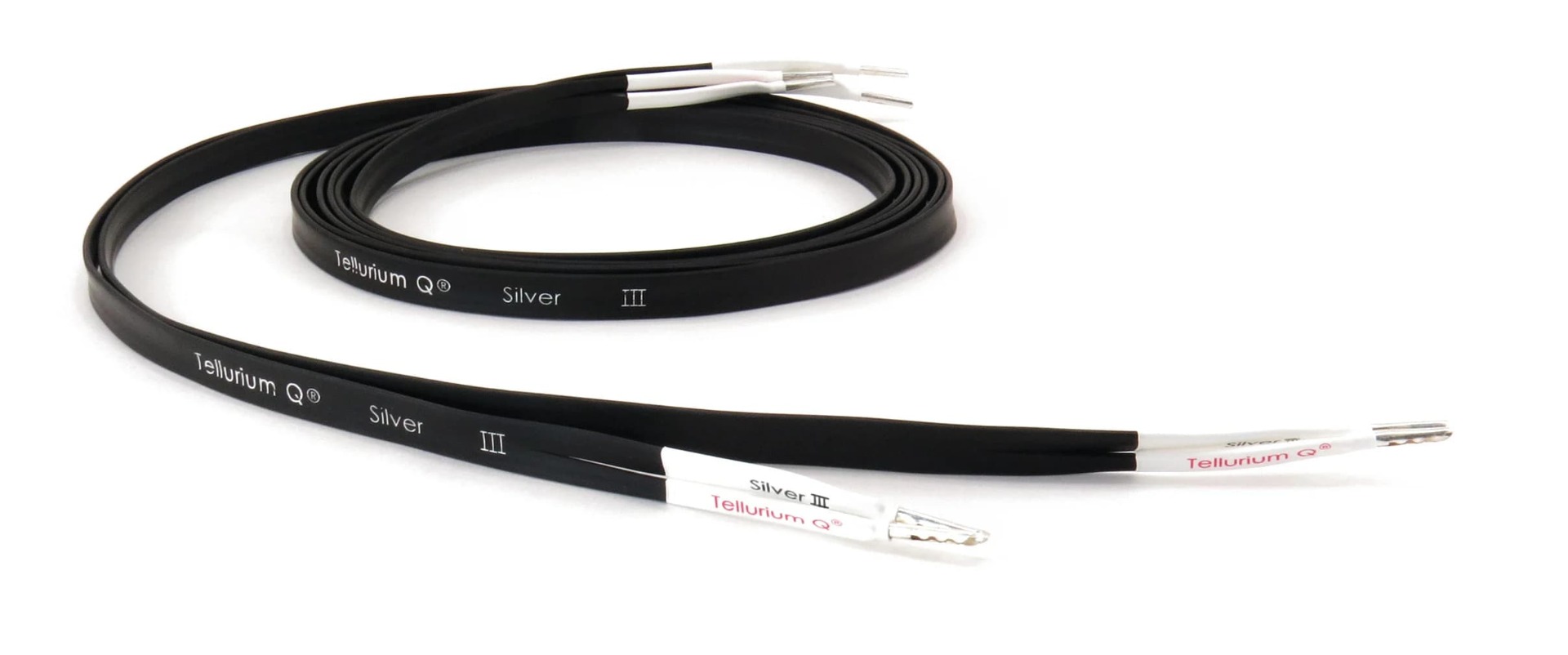
Without the benefit of burn-in, both cables already suggested their potential; their characters differed more than expected.
The Silver III immediately presented itself as the more expressive of the two. There was a sense of resonance – notes didn't just appear, they bloomed. Transients had a sharper edge, giving percussion and plucked strings more immediacy. The soundstage stepped forward too, not just wider but more three-dimensional, drawing you into the performance.
The Silver II, by contrast, felt more reserved. Leaner in tonal balance, it offered a smooth and composed presentation, but one that seemed less inclined to open out into the room. It was tidy, controlled, and easy to listen to—but next to the III, it lacked that sense of air and scale.
Classical Performance Test: Scheherazade by Nikolai Rimsky-Korsakov
This piece is always a telling test—layered, dynamic, and richly textured.
Through the Silver III, the orchestra spread itself with confidence. Strings had body and shimmer, while woodwinds floated clearly in their own space. There was a sense of being in the hall among the musicians.
The Silver II kept things more contained. The tonal palette was still pleasing, but the sense of space was less. Instruments seemed closer together; the overall image, less immersive.
After Burn-In: Refinement vs Transformation
Given time, both cables matured – but again, in different ways.
The Silver III grew into itself. Clarity improved noticeably, not in a clinical sense, but in the way individual instruments became easier to follow. The soundstage expanded further, with performers' positions well-defined. Across the frequency spectrum, there was more punch and authority – bass had grip, mids had presence, and treble remained open.
The Silver II also grew. Its change was more about refinement than transformation. The midrange became richer, more inviting, and softened slightly overall. It remained a pleasant listen but didn't quite develop the same sense of scale or depth as its sibling.
Vocal and Atmosphere Test: American by Lana Del Rey
Del Rey's remarkable, sad-dream atmospherics and vocal nuances.
Silver III accentuated Lana's haunting voice expansively amid the unfolding cinematic score.
The Silver II delivered a warmer, more intimate take. The vocal was still engaging, but the cinematic experience was more restrained.
Acoustic Detail Test: Blackbird by Beyoncé
Here, the difference was unmistakable.
Through the Silver III, the performance came alive with energy. The guitar had weight and texture – each pluck more tactile. The vocal harmonies stacked beautifully, with a sculptural depth. There was scale, punch, and an undeniable sense of excitement.
Switching to the Silver II softened the experience. Still musical, still enjoyable – but the immediacy was reduced. The guitar lost some of its physicality, and the harmonies, while present, were not quite as emotionally immersive.
Electronic Soundstage Test: Kyoto by Air
A track built on subtlety and spatial cues.
The Silver III painted a broader, more immersive picture. Synth textures drifted and layered elegantly, each element occupying its own space within the soundscape.
The Silver II, once again, kept elements densely packed. The musical message remained, though more firmly intact.
Final Verdict on the Tellurium Q Silver III – Is the Upgrade Worth It?
Although the Silver III inevitably replaces the Silver II, we haven't disregarded the Silver II's merits – it's just a matter of perspective.
The Silver II suits systems that favour a smooth, warm presentation — long, relaxed listening sessions where comfort and musicality take precedence. The Silver III is the cable for systems with the ambition to resolve more from recordings: greater scale, sharper transient definition, and a soundstage that pulls you into the performance.
The Silver II offers a refined, smooth, and comfortable presentation with plenty of detail – one that invites you into long listening sessions. It's understated in comparison, perhaps, but still musical.
The Silver III, however, takes a step further into engagement. It brings greater scale, clarity, and dynamic expression, turning good recordings into even more compelling experiences.
If you had the II, would you swap it for the III? You might . . . but you wouldn't have to. They are both enjoyable speaker cables.
We recall Tellurium Q's Black II, which is well-known for its exceptional separation making it a huge hit. The new Silver III appears to have inherited both its siblings' best traits and become something, we believe, is going to be a crowd-pleaser.
If you're weighing up speaker cables more broadly, our guide to Atlas vs QED vs Chord Company speaker cables offers a useful comparison of alternative approaches at a similar level. And if you're thinking about where speaker cables fit within a wider system upgrade, Part 5 of our Hi-Fi Upgrade series covers connectivity and cabling in full.
Both the Tellurium Q Silver III and Silver II are available now at FutureShop, backed by our 60-day money-back guarantee on cables. Not sure which is right for your system? Get in touch with our team. As a Tellurium Q reference dealer since 2011, we're happy to help.