
 WhatsApp



21 May 2026
FutureShop has been a reference dealer for Atlas cables since 2008, QED cables since 2006, and Chord Company cables since 2007. Phil Powell has been with FutureShop since 2014 and has over a decade of hands-on experience with all three brands across a wide range of hi-fi systems.
Our Verdict
Atlas leads for musical timing and rhythm, QED for technically transparent detail, and Chord Company for high-resolution soundstage. The right choice depends on your system priorities and budget.
Quick Take
- Choose Atlas if musical timing, rhythm, and flow matter most. Particularly strong with British amplifiers and speakers
- Choose QED if you want technical transparency backed by measurable performance, with strong value across the range
- Choose Chord Company if resolution, imaging, and soundstage are the priority and your system is built to reveal it
- For entry and mid-range value, Atlas Hyper and QED Performance series are among the most competitive cables at their price points
- Chord Company cables sit at a higher price point across the range but earn their asking price in the right system
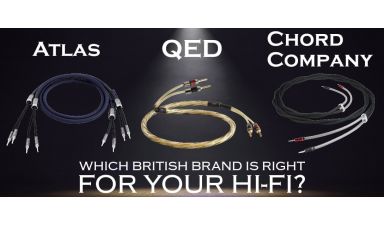
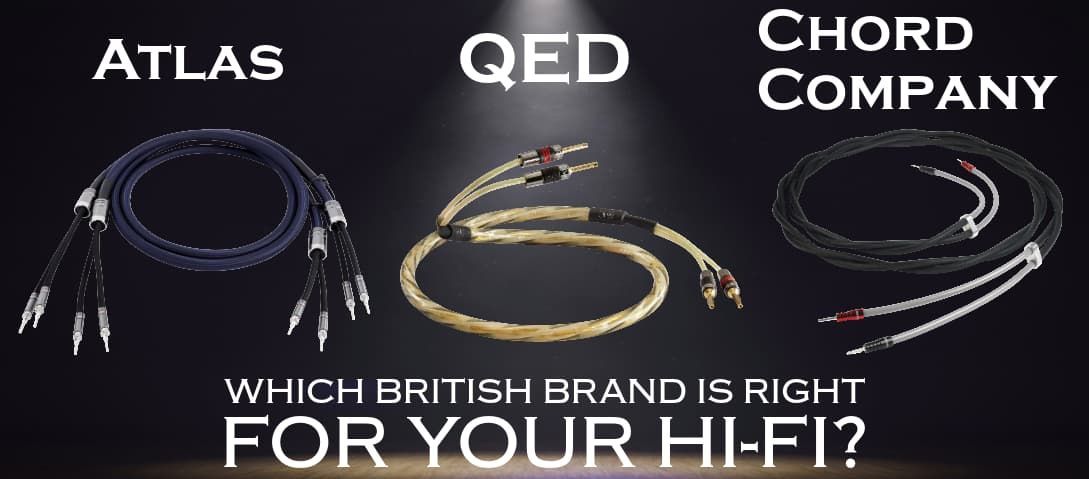
If you are looking for a quality British-made speaker cable, the chances are you have come across Atlas, QED, and Chord Company in your research. All three have strong reputations, loyal followings, and a track record of winning awards and positive reviews. But they are not interchangeable. Each brand has a distinct engineering philosophy, a different tonal character, and a different price-to-performance profile. This comparison breaks down the key differences and helps you decide which is right for your system.
| Atlas Cables | QED | Chord Company | |
|---|---|---|---|
| Founded | 1997, Scotland | 1973, UK | 1985, Salisbury, UK |
| Engineering focus | Conductor purity & geometry (low inductance twist) | Measurable performance, technical rigour | Shielding, conductor geometry, premium materials |
| Sound character | Neutral to warm, strong timing & rhythm | Detailed, transparent, clean & open | High-resolution, excellent imaging & soundstage |
| Range (entry to flagship) | Element, Equator, Hyper, Ailsa, Mavros, Arran | Performance, Reference, Signature, Supremus | Leyline, RumourX, Signature, Epic, Sarum T, Music |
| Best suited to | British amps & speakers, timing-focused listeners | Technically minded buyers, warmer system pairings | High-end systems, resolution & soundstage priority |
| Value sweet spot | Hyper & Equator | Performance series | Higher price point across the range |
| FutureShop dealer since | 2008 | 2006 | 2007 |
Atlas Cables: Geometry-Focused, Scottish Engineering
Atlas Cables is a Scottish company that has been designing cables since 1997. Their speaker cables focus on conductor purity and cable geometry as the primary levers for performance. The twisted conductor design used in the Hyper range, with the Atlas Hyper 3.5 being the standout model at that level, reduces inductance and is a key part of what makes Atlas cables sound controlled and well-timed.
Atlas's sound character is typically described as neutral to slightly warm, with strong timing and a good sense of rhythmic drive. They suit a wide range of systems and are particularly well regarded with British amplifiers and speakers, where timing and musical flow tend to be valued alongside outright resolution.
The Atlas range provides a very clear upgrade path. From the Element, to the Equator, Hyper, Ailsa, Mavros and Arran, Atlas speaker cables form a logical hierarchy with meaningful differences between each level.
Atlas represents particularly strong value at the Hyper and Equator level, where the performance relative to price is hard to match. The Mavros moves into more premium territory but remains competitive against cables at significantly higher prices from other brands.
QED: Technically Rigorous, Broadly Accessible
QED has been making cables since 1973 and is one of the longest-established names in the UK cable market. Their speaker cables are known for a technically rigorous approach that emphasises measurable performance alongside subjective listening quality. QED has historically been strong at communicating the engineering behind their products, which appeals to the technically minded buyer.
The QED range includes the widely respected Signature series at the upper end and the more accessible Performance and Reference ranges below. The QED Supremus is their flagship speaker cable and a highly regarded cable.
QED's sound character is often described as detailed and transparent, with a clean, open quality that works well in systems where clarity and resolution are priorities. Some listeners find QED cables suit their systems best when paired with warmer-sounding amplifiers or speakers, as the combination provides both resolution and tonal balance.
QED is strong on value across the range and is a sensible choice for listeners who prioritise transparency and want a cable backed by a long track record of positive reviews.
Chord Company: High-End Focus, Distinctive Construction
Chord Company was formed in 1985 in Salisbury and occupies a distinct position in the market. Their cables tend to sit at a higher price point than equivalent Atlas or QED options, and they make no apology for this. The engineering behind Chord Company cables is extensive, with a focus on shielding, conductor geometry, and the quality of materials throughout the signal path.
Chord Company speaker cables are known for a high-resolution, detailed sound with excellent imaging. The Leyline and RumourX are popular starting points, while the Signature and Epic lines represent their more serious offerings. At the upper end, the Sarum T and Music are regarded as some of the best speaker cables available at any price.
Chord Company cables suit systems where resolution and soundstage are priorities. They work particularly well in setups built around high-quality sources and amplifiers, where the cable's transparency allows the equipment to express itself fully. In systems that are already revealing, Chord Company cables will show you exactly what your components are capable of.
The trade-off is price. Chord Company cables at the mid-range cost more than equivalent Atlas or QED options. Whether the improvement justifies the premium depends on your system and your priorities, but the consensus among reviewers is that they earn their asking price.
How They Compare: A Practical Summary
For timing, rhythm, and musical flow
Atlas is the strongest performer in this area. Their twisted geometry and focus on reducing inductance suits listeners who prioritise how music moves and breathes over overt detail retrieval. British amplifier and speaker combinations in particular tend to respond very well to Atlas cables.
For technical transparency and measured performance
QED's engineering-led approach and strong measured performance make them a good fit for listeners who want to understand exactly what they are buying and why. Their cables are detailed and clean, and represent outstanding value at several price points in the range.
For high-resolution listening and soundstage
Chord Company leads in this area. Their cables are built for systems where detail, imaging, and spatial presentation are the priority. If you are assembling a high-end system and want a cable that keeps pace with ambitious electronics, Chord Company is the natural first choice.
For value at the entry and mid-range
Atlas and QED both offer strong performance at accessible price points. The Atlas Hyper and QED Performance series are among the most competitive cables available in their respective price brackets. Chord Company's entry-level options are also well regarded but start at a higher price.
Which Brand Suits Your Specific System?
The brand-level guidance above helps narrow the field. The system-level guidance below takes it further, addressing the most common equipment combinations FutureShop customers bring to us when asking this question.
Naim and Linn systems: Both brands have long been associated with timing and rhythmic drive as core priorities. Atlas is consistently the first recommendation for Naim and Linn setups, where the low-inductance geometry reinforces rather than softens the pace and timing that those amplifiers are designed to deliver. The Atlas Hyper is the starting point; the Ailsa and Mavros suit higher-end Naim and Linn separates. QED works well with Naim too, particularly in systems where the Naim character is already strong and a slightly warmer cable adds balance. Chord Company RumourX and ClearwayX are also used successfully by Naim owners who want more overt resolution from their system.
Rega systems: Rega amplifiers share a similar philosophy to Naim in valuing musical flow, but with a slightly warmer tonal balance. Atlas again suits Rega well for the same reasons. The Atlas Equator or Hyper with a Rega Elicit or Brio is a pairing that appears consistently across positive reviews and dealer recommendations. QED's Performance series also works very comfortably with Rega, and the QED XT25 is a practical and well-regarded match at entry level.
Arcam, Cambridge Audio, and warmer British integrated amplifiers: These amplifiers are typically warm and musical but can benefit from a cable that adds a degree of clarity rather than further warmth. QED is the natural first choice here: the transparency and detail that QED cables deliver suits amplifiers that are already musically rounded. Chord Company ClearwayX is also a frequent recommendation in this combination, particularly where the source components are resolving enough to benefit from the improved shielding.
Cyrus systems: Cyrus amplifiers are known for a clean, analytical presentation with strong stereo imaging. Chord Company cables are frequently recommended for Cyrus systems precisely because the cable's high-resolution character complements rather than contrasts the amplifier's natural character. The Chord Company RumourX or Signature are the most common pairings with Cyrus at the mid and upper range. Atlas also works with Cyrus, particularly where the listener wants to temper the analytical edge slightly with a more rhythmically natural presentation.
Streaming-first systems (streamer, DAC, integrated amplifier): Systems built around a network streamer and a high-quality DAC tend to reward the resolution and imaging that Chord Company cables deliver. The source quality in a well-implemented streaming system is high enough that the cable's transparency is fully audible. Chord Company ClearwayX or Signature are the natural starting points. QED is also a strong choice here, particularly where the DAC is already highly resolving and the listener wants clean, accurate reproduction without any tonal colouration from the cable.
Vinyl and phono-stage-focused systems: Turntable-based systems often have a slightly warmer, more organic character that suits Atlas cables well. The rhythmic drive and timing coherence that Atlas brings is particularly complementary to vinyl playback, where pace and flow are a significant part of the listening experience. The Atlas Hyper or Ailsa with a phono stage of similar quality is a pairing that consistently generates positive results at FutureShop. That said, some vinyl listeners with a high-quality phono stage prefer the additional resolution that Chord Company provides, particularly when the turntable itself is highly capable.
Which Should You Choose?
The right answer depends on your priorities and your system. If you value musical timing and want a cable that disappears into the system and lets the music flow, Atlas is a strong first choice. If you want technical clarity and a brand with a long track record of measured performance, QED deserves serious consideration. If you are assembling a high-end system and want the best resolution available, Chord Company is the logical destination.
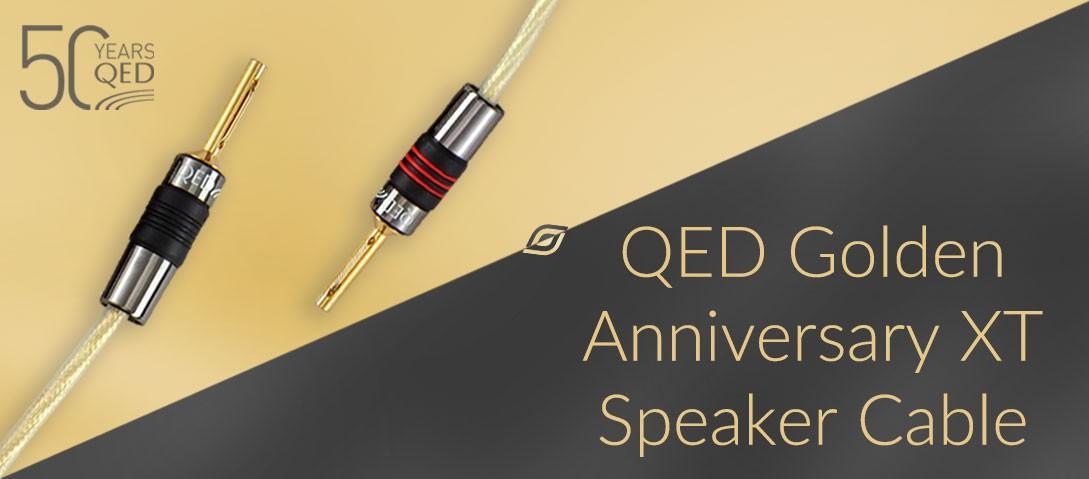
If you want to go deeper on any of these brands, our Atlas factory visit article covers the engineering in detail, and our QED Golden Anniversary XT review is a useful reference for anyone considering QED at the mid-range.
Atlas, QED, and Chord Company speaker cables are all available now at FutureShop with free UK delivery, backed by our 60-day money-back guarantee on cables. Not sure which is right for your system? Get in touch with our team. As a reference dealer for all three brands since 2006, we are happy to help.