FutureShop has been a reference dealer for Atlas cables since 2008. This visit was conducted at the Atlas Cables factory in Kilmarnock, Scotland, hosted by Kevin (MD), Brian (engineering), and Martin (sales). Written by Stevyn Durham, who regularly visits manufacturers and tests cables for FutureShop.
Our Verdict
Atlas build every cable in-house in Kilmarnock to a consistent, repeatable recipe. The new Duo interconnect range delivers meaningful step-up performance at each level, the Grun grounding system lowers the noise floor in ways cabling alone cannot, and the Superior power cable shielding adds a genuine finishing touch to a well-developed system.
Quick Take
- All Atlas cables are built in-house in Kilmarnock. Conductors are sourced from a single supplier in Taiwan; everything else, including plug assembly with 3D-printed inserts, happens on site
- The new Duo interconnect design is pseudo-balanced: a twisted pair with independent grounding per channel, giving noise rejection benefits over conventional single-ended RCA cables
- Stepping through the Duo range (Element Mezzo to Equator to Hyper to Ailsa) produced a clear, audible improvement at each level: more definition, wider soundstage, and sharper transient accuracy
- The Grun grounding system drains electronic noise from components into the mains earth. The effect is a meaningfully lower noise floor that cables alone cannot achieve
- The Superior power cable's multi-layer carbon-loaded shielding added clarity and delicacy where an unshielded higher-gauge cable left the sound fuzzier in comparison
- Atlas can upgrade existing Atlas cables to Grun compatibility. It is worth asking if you already own cables in the Arran tier or above
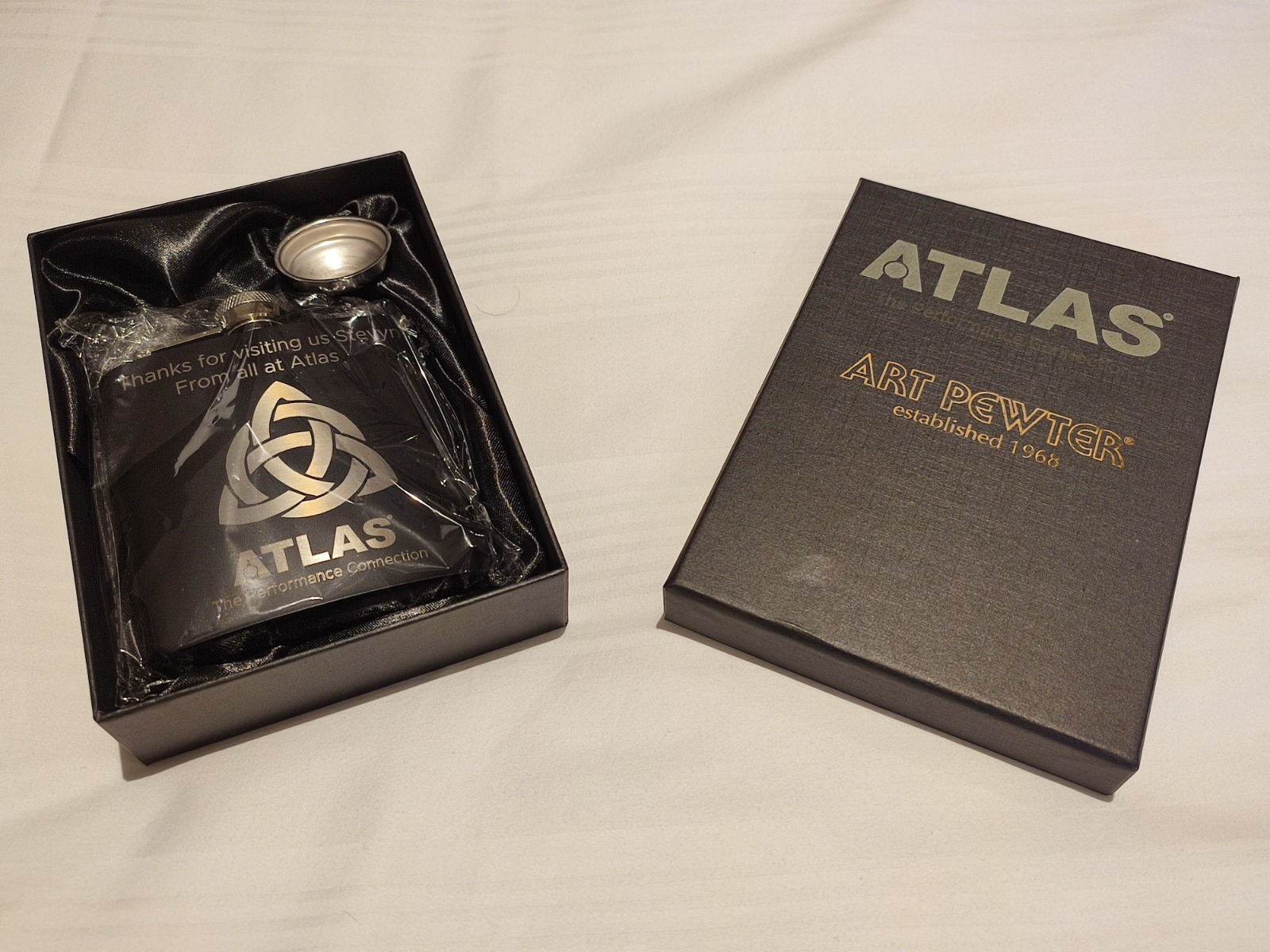
In the land of Will Wallace and whisky, Atlas have been engineering audiophile cables since the turn of the 21st century. Turns out whisky is just for the tourists, the spirited Scotsmen tell us. Funny, our welcome gift was a laser-printed hip flask filled with our choice of – what do you know? – whisky.
Aside from being a wonderful gesture, Brian – Atlas's engineering craftsman – laser-printing our names on our hip flasks was a display of what Atlas Cables can do to personalise your high-performance audio cables' metalwork. Take a look...
One client had their company name laser-cut onto the cable stoppers and packaging. Cutting edge.
A Behind-the-Scenes Look
Atlas products are all built in-house under the clouds of Kilmarnock (the raw parts are built to stringent specifications in more exotic territories).
Creating Atlas cables is a two-step process: 1) design, 2) manufacture. The endgame is, as always, low loss, low noise. Kevin, the MD and French horn blowing designer (so, he knows a bit about noise), dreams up the 'recipes' – the ingredients being measures of conductor, dielectric, screening and connectors. Brian makes Kevin's recipes in his cable distillery.
The goal is consistency, and the recipe concept means manufacturing results are always repeatable from entry-level to high-end. They even have a machine to cut and strip cables perfectly, give or take a hair's breadth.
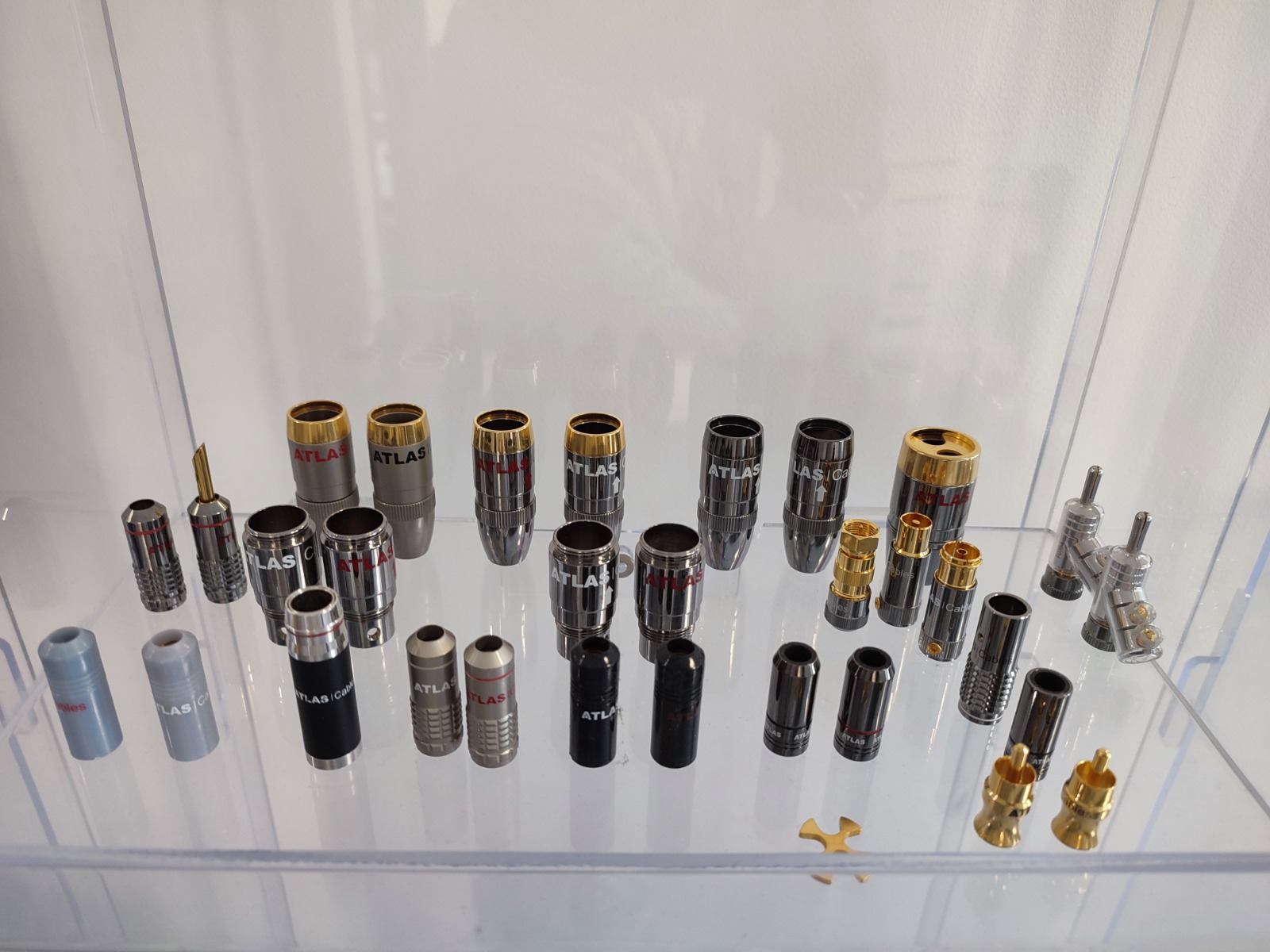
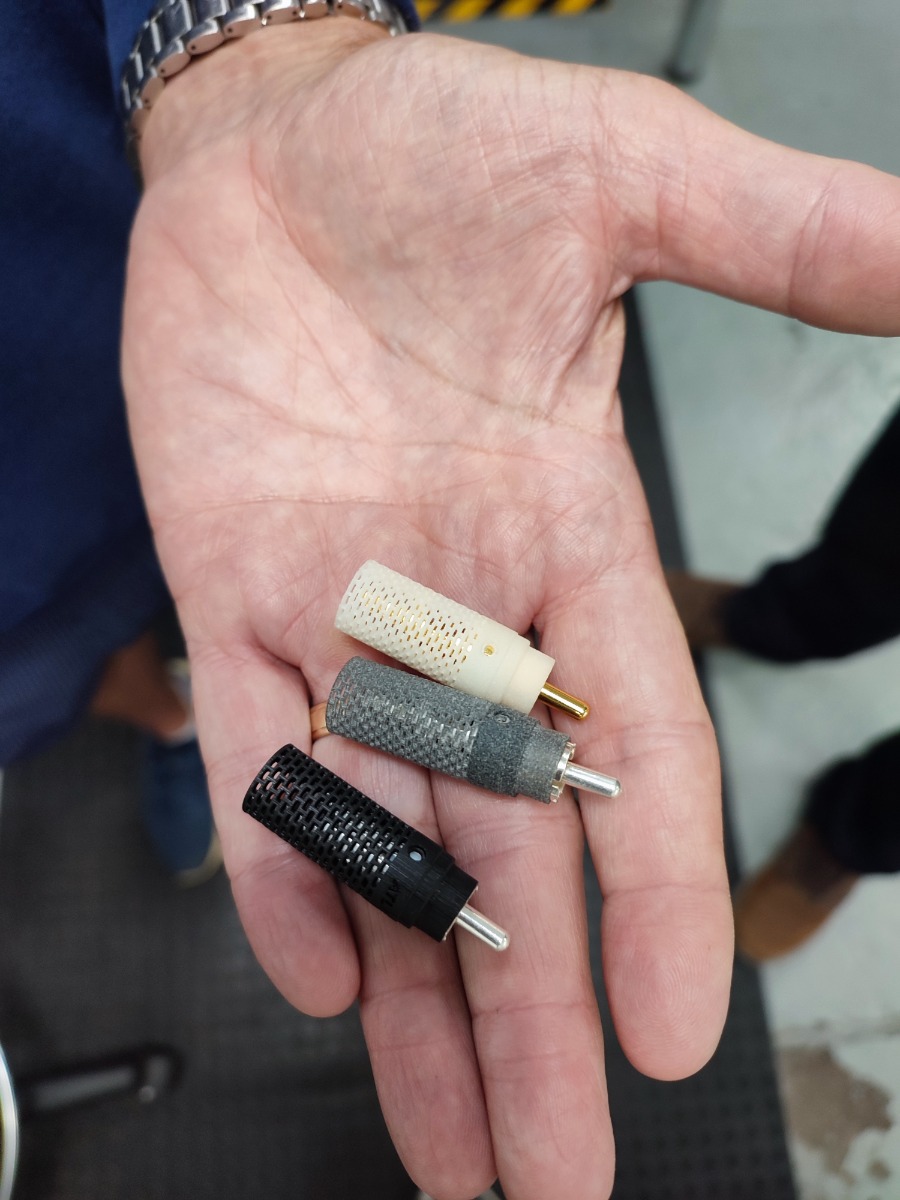
Materials are obtained from a single source in Taiwan, who draw the copper conductors, but the plugs are assembled in-house with 3D-printed polyethene inserts in aluminium cases. Going up the range uses the same parts but with better materials. Consistency. All this means that they can turn around new cables in 48 hours if they really want to.
What's in a cable? Cables blended the Scots way.
Remember the ingredients?
- Conductors: High-purity OCC copper or silver for low resistance and improved clarity. Up the range, Atlas favours solid core conductors. Fewer strands the better – there's less strand interaction and signal smearing (the pros and cons are another story).
- Dielectric Insulation: PTFE or micro-porous PEF to minimise signal loss. Signal is lost into the dielectric, so well-chosen materials are used to ensure that the conductor is in near-vacuum conditions – effectively empty space.
- Connectors: Cold-welded Achromatic or Ultra plugs designed to eliminate solder contamination and reduce mechanical stress. Soldering, by nature, is inconsistent – the crimp connects the plug directly to the conductor (the ideal plug is the same material as the conductor).
- Shielding: Carefully applied to block noise without reducing flexibility. More than ever, electronic noise floods in from all the electrical devices that fill our living spaces. Shielding protects cables from this interference.
- Damping: Cotton strands dampen micro vibrations in speaker cables, reducing microphony, where mechanical movement is converted into electrical noise.
It's the balancing act of the above that engineers perform to tune the end result.
A little on OCC
The OCC manufacturing process uses a heated mould to cast and continuously draw copper. This results in a copper wire with a single, continuous crystal grain that can be up to 125 meters long. This means smooth signal transmission.
The new 'Duo' Design Range
Although a flask of Laphroaig and an Atlas polo shirt made our 400-mile journey to Kilmarnock most profitable, hearing cables perform was our intention. The main event was the new Duo design interconnects.
The Duo design is a pseudo-balanced cable – a twisted pair of conductors with independent grounding and shield for each channel.
A little on pseudo-balanced
Pseudo-balanced cables are nothing new, but it is an underused technique, likely due to the costs of double the conductors. It makes sense used with RCA, which are unbalanced, but rarely with XLR, which are already balanced.
The twisted pair, instead of sending two copies of the signal (one inverted), only one side (the 'hot') carries the signal; the 'cold' side is tied to ground or matched to ground via an impedance. Because the impedances are matched, the receiver can reject common-mode noise.
On the new Atlas XLR cable, both the 'hot' signals use this pseudo-balanced topology for even better noise cancellation, improving dynamics.
Demonstrating the Dynamic Duo
Martin, Atlas's cantie, golf-swinging sales contact, connected some XLR cables and queued up a Ray Charles and Natalie Cole version of Fever. The first test was going up from Element Mezzo to Equator's heavier gauge OCC conductors. Better definition, more rounded sound.
The next step up was to Hyper Duo. Together with the Duo topology, its purer conductors and more robust shielding gave us punchier, wider and altogether more three-dimensional music.
Up another step was the Ailsa Duo (named after a pretty rock in the Firth of Clyde), with more screen and more conductor. We heard more depth and weight. Sound was more angular because the transient accuracy had sharpened.
XLR vs RCA
At this point, we digressed into a comparison of XLR with RCA using the Ailsa. Aside from the volume change (XLRs are usually louder), we noted a thinning and flattening in contrast. However, the Duo topology aims to mitigate this effect in RCA cables compared to conventional, single-ended designs.
For a fuller guide on when XLR or RCA is the right choice for your system, see our RCA vs XLR guide.
The Next Level – The Grun
Ascending the Atlas range landed us on the Arran (a much bigger rock in the Firth of Clyde). At this point, the entire system was laced together with a loom of Arran cabling. We were testing Atlas's Grun system.
What's in the Grun?
Say the word 'ground' in your best Scots accent (make sure there are no good Scottish folk within earshot). It's a grounding system using mains earth to drain electronic noise from components into the 'grun'. Electronic noise (anything electrical, for that matter) likes the path of least resistance.
High-end Atlas cables are fitted with a 'fly lead' that can connect to a mains plug, with the live and neutral pins absent (cleverly preventing death by electrocution).
How did it sound?
Again, Atlas offers us an effective and underused technique. With the Grun system connected, you greatly lower the noise floor in a way cables alone cannot. We listened with and without, not failing to be impressed with the grounding solution's effect. Without it, sound is woollier and flatter.
It's worth knowing that Atlas can upgrade any of your Atlas cables to use with Grun. It's certainly worth considering taking your hi-fi to the next level.
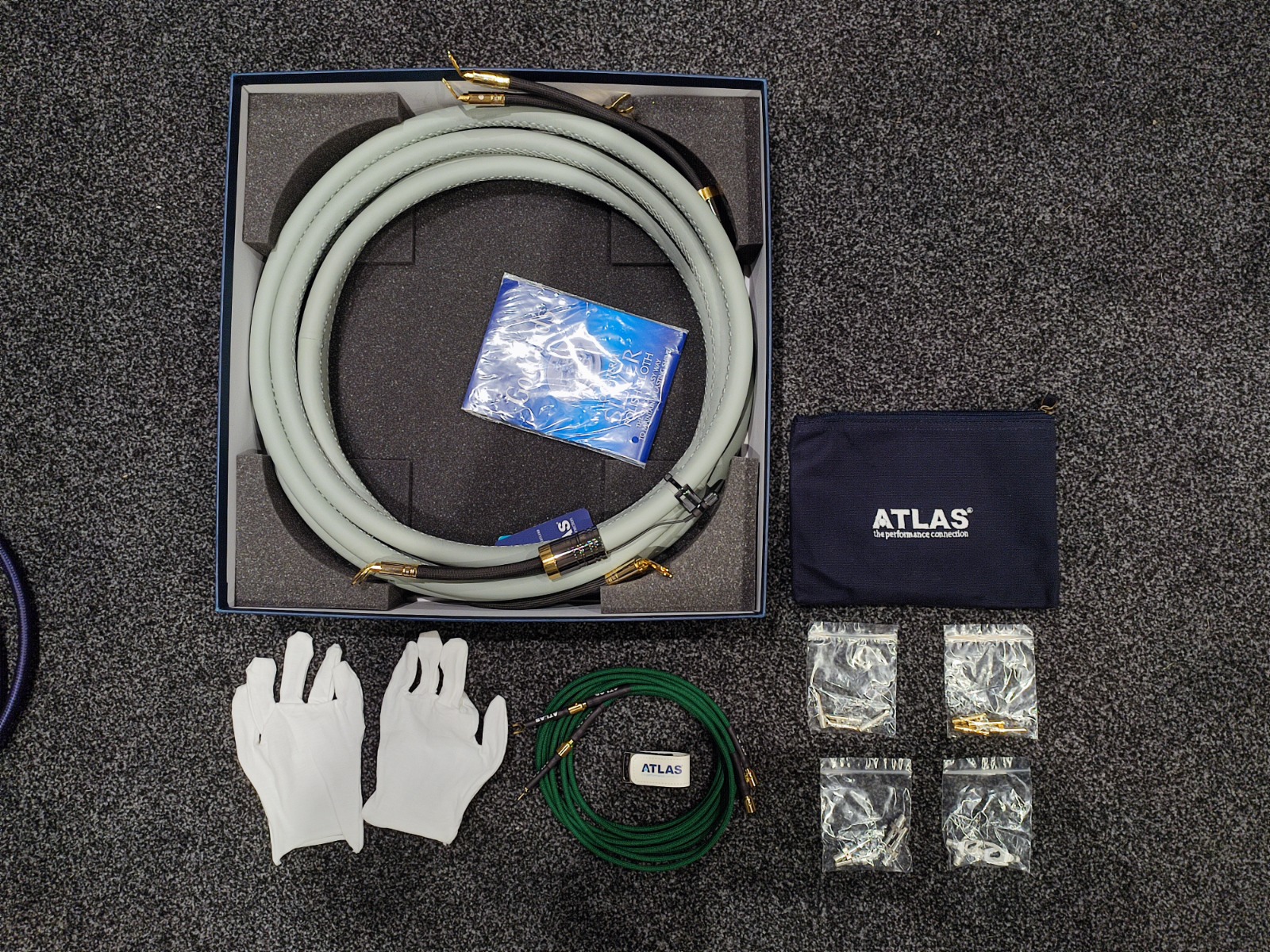
Scottish Power – The final test
No, Atlas do not offer half-price electricity at weekends. Far from it – they offer premium power cables to send electricity (whatever tariff you're on) into your components.
Just on the preamp (a particularly noisy component), we swapped out the higher gauge 4.0 em for a thinner 2.5 'Superior' em. The Superior range adds multi-layer carbon-loaded/OFC shielding (and a leather jacket with your choice of stitching – indulgent but looks cooler than Michael Jackson performing Beat It).
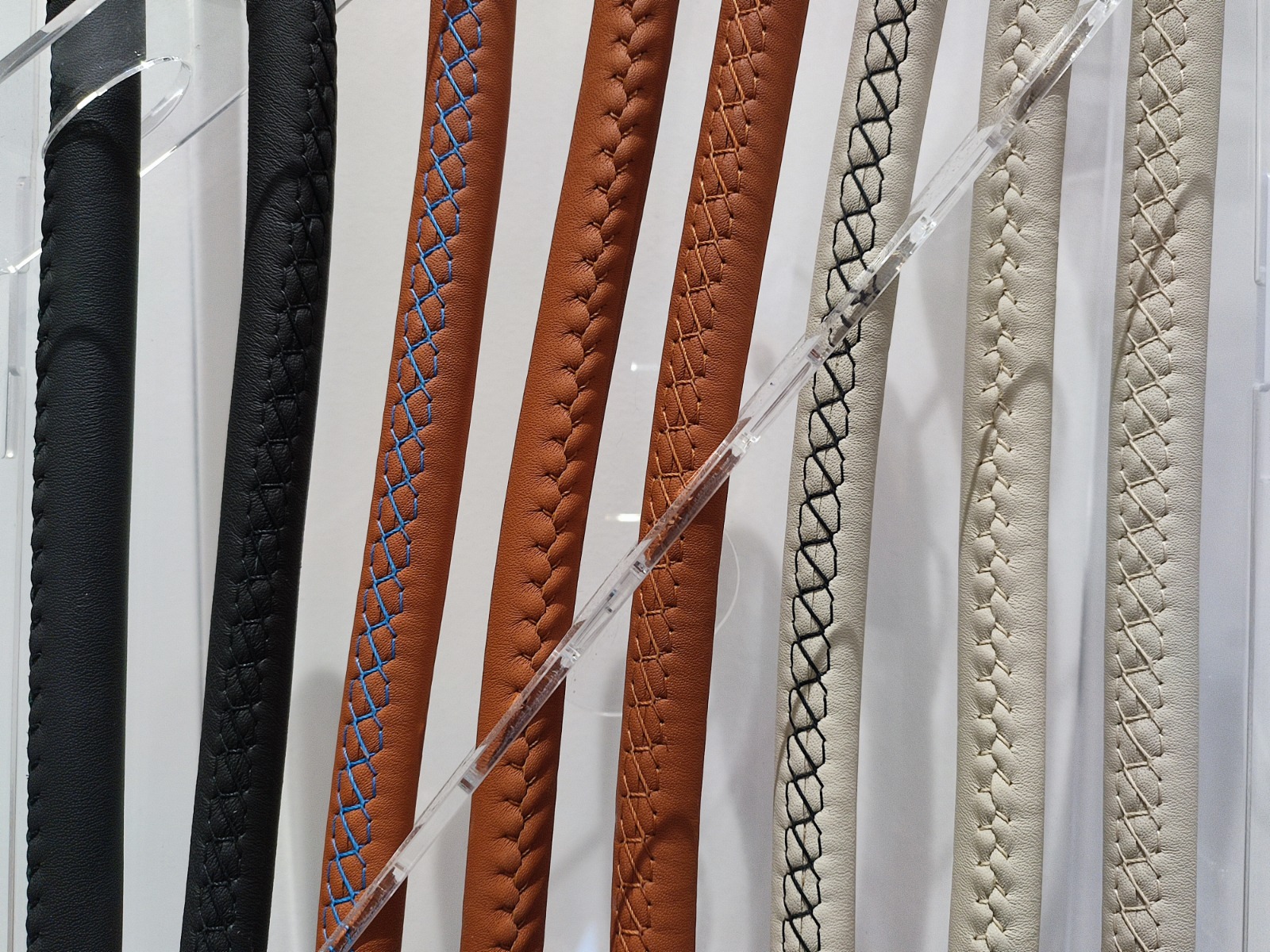
As expected, the Superior shielding made the sound crisp and vibrant. The enhanced delicacy now in the music is the finishing touch in what a decent power cord should do. Even swapping down to a higher gauge unshielded 4.0 em model, although it had great scale, made the music fuzzier in contrast.
Fair thee well, Kilmarnock
With all the testing and talking done, we were well past close of business. The marketing director, Alan, was still around and walked in with a generous (too generous) dram of Laphroaig. Just for the tourists?
If the Atlas cable range has sparked your interest, our guide to Atlas vs QED vs Chord Company speaker cables covers how Atlas compares against the other major British cable brands, and is a useful next step for anyone deciding where Atlas fits in their system.
Browse the full range of Atlas interconnects, Atlas XLR cables, Atlas speaker cables, Atlas power cables, and the Atlas Grun grounding system at FutureShop, all backed by our 60-day money-back guarantee on cables. Not sure where to start? Get in touch with our team. As an Atlas reference dealer since 2008, we are happy to help.