Our Verdict
Addressing vibration, cleanliness, organisation, and room acoustics is the finishing layer that turns a capable system into a captivating one. A well-chosen hi-fi rack, quality isolation accessories, and clean connections can make as much difference as a component upgrade.
Quick Take
- Hi-fi racks from brands like Quadraspire and Atacama are engineered to minimise vibration and resonance. The support surface your equipment sits on directly affects sonic clarity.
- Isolation feet, spikes, and damping pads reduce mechanical energy transmission. Silicone and sorbothane feet absorb low-frequency vibration; spikes and cones provide rigid coupling for heavier components.
- Contact cleaners such as DeoxIT restore conductivity at connection points and are one of the highest-value, lowest-cost upgrades available. Anti-static brushes and stylus cleaners are essential for vinyl users.
- Elevating speaker cables off the floor with cable risers reduces static build-up. Routing cables away from mains leads and digital cables also minimises noise pickup.
- Room acoustics can have a bigger effect on soundstage and tonal balance than many hardware upgrades. Acoustic panels, bass traps, and diffusers address the listening environment directly.
- Grounding devices reduce hum and lower system noise floors, particularly in complex setups with mixed digital and analogue components.
Building a great hi-fi system isn't just about amplifiers, speakers, and cables, it's also about the finishing touches that help your system perform at its best. From vibration control and equipment racks to cleaning accessories and isolation solutions, these small but vital details can elevate your setup from good to exceptional. In this guide, we'll explore the key hi-fi essentials that every enthusiast should consider.
Why Hi-Fi Essentials Matter
Hi-fi essentials ensure your equipment performs as intended, remains protected, and delivers consistent sound over time. Think of them as the foundation and fine-tuning tools of your system. A well-isolated turntable, a stable rack, and clean connections can make as much difference as a component upgrade.
Equipment Racks and Supports
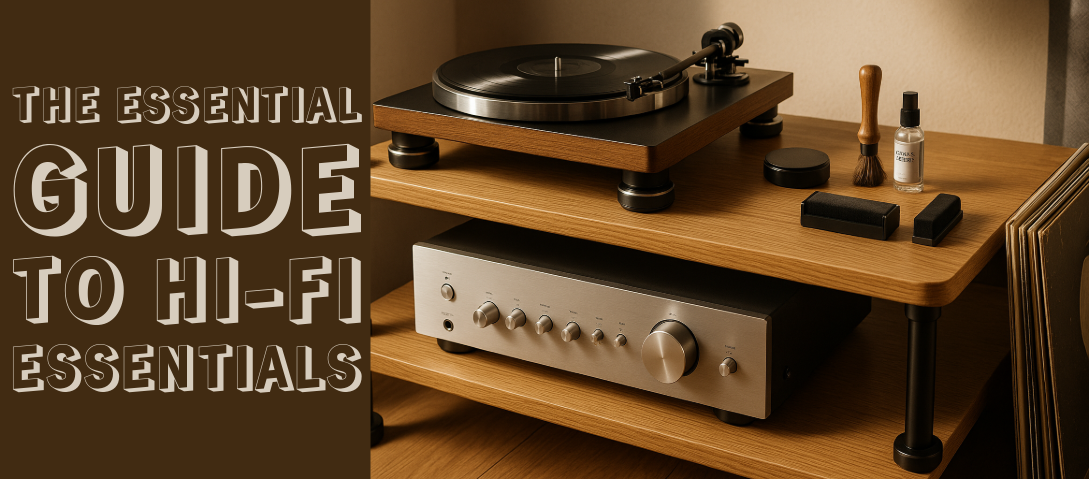
The surface your equipment sits on has a major impact on performance. Hi-fi racks are designed to minimise vibration and resonance, isolating your components from floor-borne energy. Solid construction, rigid frames, and decoupled shelving help maintain sonic clarity.
- Dedicated Hi-Fi Racks: Brands like Quadraspire, Atacama, and Solidsteel engineer racks with acoustic isolation in mind.
- Wall Shelves: Ideal for turntables and lightweight components to reduce vibration from footfall.
- Isolation Platforms: Add-on shelves or bases made from wood, glass, or composite materials that absorb unwanted resonance.
Isolation and Anti-Vibration Accessories
Even small amounts of vibration can blur musical detail. Isolation feet, spikes, and damping pads reduce unwanted mechanical energy transmission between your equipment and its support surface.
- Isolation Feet: Silicone, sorbothane, or spring-loaded feet absorb low-frequency vibrations.
- Spikes and Cones: Rigid coupling solutions that stabilise heavier equipment.
- Component Bridges: Separate cables and power supplies from sensitive signal components to lower noise floors.
Cleaning and Maintenance
Keeping your system clean helps preserve both performance and appearance.
- Vinyl and Stylus Care: Anti-static brushes, record-cleaning fluids, and stylus cleaners prevent noise and stylus wear.
- Contact Cleaners: Products like DeoxIT restore electrical contacts and improve conductivity.
- Screen and Surface Cleaners: Safe solutions for displays, aluminium fascias, and speaker cabinets.
Routine cleaning not only enhances reliability but also extends the lifespan of your investment.
Cable Management and Organisation
A tidy setup is more than aesthetic, it also improves performance by reducing interference and maintaining proper airflow.
- Cable Tidies and Sleeves: Bundle and route cables neatly to avoid tangles.
- Cable Risers: Elevate speaker cables off the floor to reduce static build-up.
Good cable discipline helps prevent accidental disconnections and makes upgrades far easier.
System Setup and Accessories
Small accessories can make setup smoother and your listening experience more enjoyable:
- Spirit Levels and Alignment Tools: Ensure your turntable or rack is perfectly level.
- Grounding Devices: Reduce hum and improve system noise floors.
- Adapters and Converters: For connecting legacy or portable gear seamlessly.
The Role of Room Acoustics
Even the best components struggle in poor acoustic environments. Adding simple room treatments can improve clarity and balance:
- Acoustic Panels: Absorb reflections and reduce harshness.
- Bass Traps: Control low-frequency buildup in corners.
- Diffusers: Scatter reflections for a more natural soundstage.
Fine-tuning the room is one of the most effective, and often overlooked, upgrades you can make.
Where to Start: A Priority Guide to Hi-Fi Essentials
The seven categories above all contribute to better system performance, but approaching all of them simultaneously is rarely practical. Here is the priority sequence FutureShop recommends for building up these essentials incrementally, based on where customers consistently hear the most improvement for the least investment.
Step 1: Contact cleaning (free to very low cost, highest immediate return). Before any purchase, clean every connection in your system with a quality contact cleaner such as DeoxIT Gold. Every RCA, XLR, speaker terminal, fuse cap, and IEC socket accumulates oxidation over time, and that oxidation increases resistance at every contact point in the signal and power path. A single thorough application across all connections in your system takes under an hour and costs very little. The improvement in contact integrity is immediate and directly audible as a lower noise floor, slightly more open presentation, and more stable stereo imaging. This is the one essential in this category that is worth doing before anything else, at any stage of system development.
Step 2: A quality hi-fi rack (if equipment is currently on furniture). If your components are sitting on a domestic bookshelf, sideboard, or other non-dedicated furniture, a purpose-built hi-fi rack is the single highest-leverage physical upgrade available to most systems. The rack addresses vibration from all components simultaneously: everything sitting on it benefits from the controlled resonance characteristics of the rack material. Atacama racks in bamboo and steel offer a warm, well-damped character at accessible prices; Quadraspire uses a more open, modular approach that suits systems where airflow and accessibility matter. Our Quadraspire rack review covers the real-world sonic difference between rack tiers in a direct comparison.
Step 3: Isolation feet under the most vibration-sensitive components. Once a rack is in place, isolation feet under individual components address the vibration that travels through the rack shelf itself. Priority order is the same as elsewhere in the system: the turntable first (most mechanically sensitive), then the DAC (clock circuit sensitivity), then the amplifier. IsoAcoustics Orea feet are the most consistently recommended starting point for component-level isolation, with different weight ratings for different components. For turntables on suspended floors, a wall-mounted shelf on a load-bearing wall is the most effective single isolation upgrade, as it bypasses the floor vibration path entirely. The component-by-component and floor-type isolation guide is covered in detail in our Vibration and Support guide.
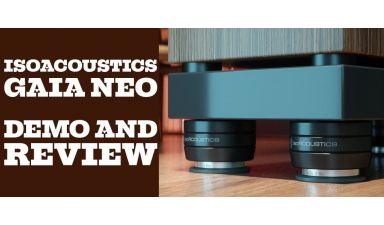
Step 4: Speaker isolation feet (for floorstanders) or speaker stands (for standmounts). Speakers are the component where vibration has the most direct and audible effect. Floorstanding speakers in direct contact with a hard floor create a vibration feedback loop: speaker energy travels into the floor and back up into the cabinet. IsoAcoustics GAIA feet address this on hard floors; spikes on carpet are the conventional approach. For standmount speakers, proper stands with mass-loading (Atacama Atabites or equivalent) are more productive than component isolation feet at the same budget. Our IsoAcoustics GAIA Neo review documents the audible improvement on Focal floorstanding speakers in a controlled comparison.
Step 5: Cable management and routing. Once physical isolation is addressed, tidy cable routing reduces the noise that cables pick up from each other. The practical rule is simple: keep mains and power cables separated from signal cables wherever they run in parallel. A crossing at 90 degrees is acceptable; a parallel run is not. Cable risers for speaker cables address the static and RF pickup that occurs when cables rest on carpet or near mains distribution blocks. This is the lowest-cost step in the sequence and the one most commonly done too early before the more impactful physical isolation work.
Step 6: Room acoustics (last, and only when the system is otherwise well-optimised). Room treatment is the last step because it only addresses the room, not the system: a system with vibration problems, dirty connections, and poor isolation will not sound noticeably better with acoustic panels on the walls. Once the system itself is performing well, room acoustics become the limiting factor. The symptoms that indicate acoustic treatment will help are specific: bass that booms or varies between listening positions (room modes), treble that sounds bright or harsh (early reflections from hard surfaces), and a soundstage that lacks depth or focus (generally under-treated room). Our Listening Room guide gives the practical diagnostic tools for identifying which acoustic problem your room has, including the free clap test for identifying flutter echo and room modes before spending on treatment.
Common Questions About Hi-Fi Essentials
Do I really need a dedicated hi-fi rack?
Yes. A sturdy, acoustically optimised rack improves isolation and airflow, and protects your investment.
Will isolation feet make a difference?
In most cases, yes. Reducing vibration helps maintain focus, imaging, and detail, especially for turntables and tube gear.
What's the best way to clean connectors?
Use a specialist contact cleaner like DeoxIT on interconnects and power plugs. Avoid abrasive materials that can scratch plating.
Can room treatment improve sound quality more than cables?
Absolutely. Proper acoustic treatment can have a bigger effect on soundstage and tonal balance than many hardware upgrades.
Summary
Hi-fi essentials are the finishing layer that transforms a system from capable to captivating. They enhance performance, protect your investment, and make day-to-day listening more enjoyable. By addressing vibration, cleanliness, organisation, and room acoustics, you can unlock the full potential of your hi-fi components.
Explore our full range of hi-fi essentials, from racks and isolation accessories to cleaning kits and cable management solutions, to refine and optimise your setup.
For a deeper look at how vibration control fits into a full system upgrade, our Vibration Control and Support guide covers racks, isolation feet, and speaker stability in detail. If you are considering a rack specifically, our Quadraspire rack review shows the real-world difference between entry-level and reference-grade shelving.
Browse our full range of hi-fi essentials, including racks, isolation accessories, and contact cleaners. Not sure where to start? Get in touch with our team for free expert advice.