Our Verdict
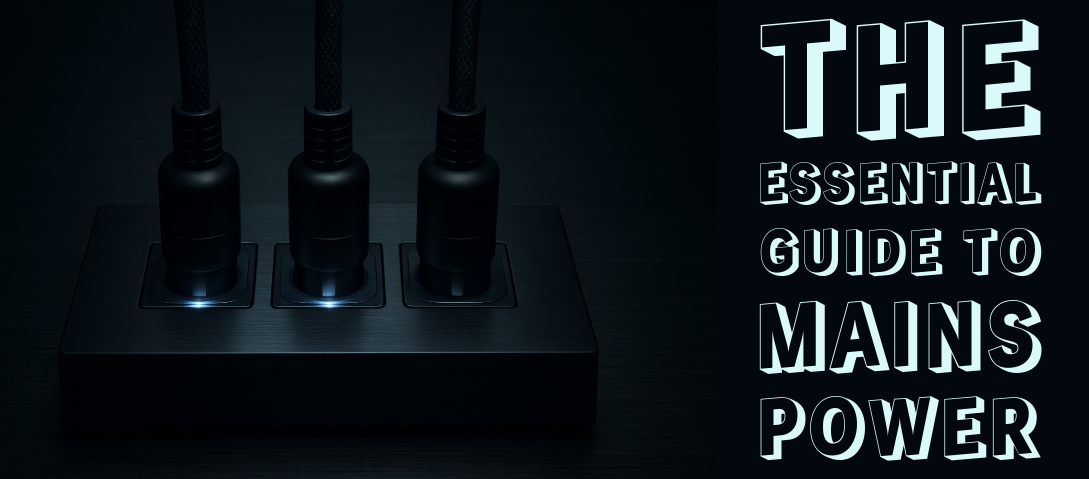
Clean, stable power is the foundation of any great hi-fi system. Upgrading your power cables, adding a quality distribution block, and considering a conditioner where needed can unlock deeper dynamics, improved timing, and a quieter background in any system.
Quick Take
- Modern homes introduce EMI and RFI onto the mains via routers, LED lighting, chargers, and smart appliances. Upgraded power cables and conditioners reduce this noise before it reaches your components.
- Use high-current cables (2.5mm² or heavier) for amplifiers and power conditioners. Source components such as DACs and streamers benefit more from shielding quality than conductor size.
- A quality power block distributes electricity to multiple components with low resistance. Look for isolated socket groups to prevent cross-contamination between digital and analogue components.
- Power conditioners filter noise actively and may include surge protection and voltage regulation. Power regenerators go further by rebuilding the AC waveform entirely, producing a clean 230V/50Hz output.
- Start upgrades at the power block or wall socket and work outwards to each component. Consistency within one brand ecosystem generally yields the most balanced results.
- Grounding accessories such as ground boxes and grounding cables can reduce residual hum and high-frequency interference, particularly in complex multi-component setups.
Power cables are often the most overlooked part of a hi-fi or home cinema system, yet they play a critical role in delivering clean, stable energy to your equipment. Every component in your system, from your amplifier and DAC to your TV and streamer, depends on a consistent, noise-free power supply. Upgrading and properly managing your mains connections can have a surprising impact on sound and picture performance.
Why Power Quality Matters
Your hi-fi components convert electrical energy into audio signals. If the power feeding them is contaminated with noise or interference, that same distortion can influence your sound. Modern homes are full of devices, routers, LED lighting, chargers, and smart appliances, that introduce electromagnetic noise onto the mains. Power cables and conditioners help reduce this noise, ensuring your system receives the cleanest possible current.
Types of Power Cables
Standard Power Cables
Most entry-level systems use basic molded IEC power leads. While functional, these are typically made from standard copper with minimal shielding, which can allow noise ingress. Upgrading to a well-designed power cable with improved conductors and shielding can lower background noise and enhance system focus.
Shielded Power Cables
Shielding is one of the most effective ways to reduce radio-frequency interference (RFI) and electromagnetic interference (EMI). High-quality power cables feature multiple shielding layers and robust outer jackets, preventing noise from both entering and leaving the cable.
High-Current Power Cables
Amplifiers and power conditioners often draw significant current. High-current-rated cables use heavier-gauge conductors (often 2.5mm² or higher) to deliver unrestricted power flow. This can tighten bass response and improve dynamic headroom.
Source Component Cables
Source components like DACs and CD players draw less current but are more sensitive to interference. Power cables for sources typically prioritise shielding and dielectric quality over sheer conductor size, maintaining subtle detail and tonal accuracy.
Power Distribution and Conditioning
Power Blocks
A high-quality power block distributes electricity to multiple components while maintaining low resistance and minimal noise. Look for solid internal wiring, filtered outlets, and robust metal casings. Some blocks isolate groups of sockets to prevent cross-contamination between digital and analogue components.
Power Conditioners
Power conditioners go a step further by filtering out unwanted electrical noise. They may include surge protection, voltage regulation, or differential filtering for digital and analogue circuits. The result is a quieter, more stable power supply that lets your equipment perform more consistently.
Power Regenerators
At the premium end, regenerators completely rebuild the AC waveform, outputting a fresh, stable 230V/50Hz supply independent of incoming mains fluctuations. They can dramatically improve dynamics, imaging, and background silence in revealing systems.
Grounding and Noise Reduction Accessories
Devices such as ground boxes, grounding cables, and plug-in noise absorbers can help further reduce hum or high-frequency interference. These are particularly useful in complex setups with multiple components or mixed digital and analogue gear. For an in-depth look at how grounding works in practice, see our Entreq Tellus 3 grounding review.
Cable Construction and Materials
The effectiveness of a power cable depends on both design and materials:
- Conductors: Oxygen-free or silver-plated copper provides low resistance and high conductivity.
- Shielding: Braided copper or aluminium foil shields block RFI/EMI.
- Dielectrics: Materials like PVC, polyethylene (PE), or PTFE insulate the conductors and influence capacitance.
- Connectors: IEC, C7, or figure-8 plugs are used depending on the component. High-quality connectors with tight tolerances ensure secure contact and longevity.
- Geometry: Twisted or parallel conductor layouts can control inductance and reduce noise pickup.
Choosing the Right Power Cable
- Match to Component Type: Use high-current cables for amplifiers and robust shielded designs for sources and streamers.
- Start from the Source: Begin upgrades at the power block or wall socket and work outwards to each component.
- Ensure Consistency: Use the same range or brand of cables to maintain system synergy.
- Mind the Basics: Good power connections complement (not replace) proper system grounding and layout.
- Try Before You Buy: Where possible, test different cables to hear how your system responds. All power cables at FutureShop are backed by our 60-day money-back guarantee.
Which Power Cable Brand for Your System?
The five brands in our power cable range each occupy a distinct position in the market and suit different system types, budgets, and listening priorities. Here is FutureShop's guide to choosing between them.
AudioQuest: whole-system coherence and strong value at mid-range: AudioQuest was founded in California in 1980 and produces power cables that are particularly strong at mid-range price points, where their solid conductor geometry and noise dissipation technology deliver consistent improvements to dynamics and background silence. The NRG-Y3 is the most accessible starting point and one of FutureShop's most frequently recommended first power cable upgrades. AudioQuest power cables reward whole-system builds: pairing AudioQuest power, signal, and speaker cables produces a particularly coherent presentation. The NRG-Z3 and above introduce further noise dissipation geometry and suit systems where the source quality is high enough to reveal the additional improvement.
Chord Company: shielding-led design for revealing systems: Chord Company's power cables follow the same engineering approach as their signal cables: extensive shielding, quality conductors, and a focus on background silence and signal purity. Chord Company power cables are particularly well suited to systems where the source components are already of high quality and where the listener values the kind of fine detail and imaging that a low noise floor enables. The Mains Chord EpicX is the most commonly recommended Chord Company power cable at mid-range. For listeners already using Chord Company signal cables, matching the power cable to the same range produces a consistent tonal character across the full signal path.
Shunyata Research: reference-level noise reduction for high-end systems: Shunyata Research is an American brand whose power cables and conditioners are used extensively in professional recording studios. Their NLT (Noise Locking Technology) and CCI (Component-to-Component Interference) filtering are specifically designed to address the noise that travels between components sharing a power distribution unit, making Shunyata particularly relevant for complex systems with multiple separates. Shunyata is the most consistently recommended power cable brand in reference-grade systems at FutureShop, where the improvement in dynamic resolution and background silence is most clearly audible. The Alpha NR and Sigma NR represent their current state of the art for residential use. Our Shunyata Alpha and Omega review covers both cables in a full loom comparison.
IsoTek: accessible conditioning and strong entry-level performance: IsoTek is a British brand founded in 2001 that specialises in power conditioning, with a range that spans from the accessible EVO3 Polaris power block through to the flagship Titan conditioner. IsoTek is the most accessible entry point into filtered power distribution at FutureShop: their EVO3 Initium power cable is one of the most frequently recommended first power cable upgrades across all system types, and the EVO3 Polaris block is the most commonly recommended first power block for systems where a quality distribution point has not yet been addressed. IsoTek's approach of providing individually filtered outlets within a single distribution block makes them practical for multi-component systems at mid-range budgets.
Nordost: dynamic performance and full-loom coherence: Nordost is a Norwegian-American brand founded in 1991 whose power cables are designed around the same flat conductor technology used in their signal cables. Nordost power cables are known for an improvement in dynamic scale and musical energy that is distinct from the noise-reduction character of other brands: where many power cables improve background silence, Nordost tends to also improve the scale and authority of musical events. Nordost suits systems where the listener values dynamic life and musical impact alongside noise reduction. The Leif series is the most accessible starting point; the Heimdall 2 and above introduce the full benefit of their SPELTZ conductor technology. Our Nordost Leif 3 Series review covers their power cables alongside speaker cables and interconnects in a full loom comparison.
Common Questions About Power Cables and Conditioning
Do power cables really make a difference?
Yes. While they don't add power, they can reduce interference and improve the consistency of current delivery, allowing your components to perform optimally.
What's the best order to upgrade power components?
Start with a quality power block, then upgrade cables for your amplifier and source components. Consider a conditioner or regenerator for the final stage.
Can I mix power cables from different brands?
You can, but many enthusiasts find that sticking to one brand's ecosystem yields more balanced results.
Are power conditioners safe for amplifiers?
Yes, provided they're designed for high-current use. Avoid conditioners that limit current draw on power-hungry amplifiers.
Do I need surge protection?
Absolutely. Even minor surges can damage sensitive electronics. Most quality power conditioners include built-in protection.
Summary
Clean, stable power is the foundation of any great hi-fi system. By upgrading your power cables, adding quality distribution blocks, and considering filtration or regeneration where needed, you can unlock deeper dynamics, improved timing, and a more natural soundstage. The difference might not be subtle, especially in revealing systems.
Explore our complete range of power cables, blocks, and conditioners from industry leaders like AudioQuest, Chord Company, Shunyata Research, IsoTek, and Nordost.
For a practical deep-dive into how power upgrades fit within a full system, our Upgrading Your Hi-Fi System: Power and Grounding guide covers every stage in detail. If you are still weighing up whether a power cable upgrade is worthwhile, our article Do Hi-Fi Mains Power Cables Really Make a Difference? addresses the question head-on.
Browse our full range of power cables, power blocks, and power conditioners, all backed by our 60-day money-back guarantee. Not sure where to start? Get in touch with our team for free expert advice.