FutureShop has been a reference dealer for Entreq since 2015. This review was conducted on our in-house reference system: Ayre V-5 power amplifier, Ayre K-5 pre-amplifier, Ayre C-5 CD player, and B&W 803 speakers.
Our Verdict
The Entreq Tellus 3, MaxMix, and Protectus each produced clear, consistent improvements to noise floor, bass definition, and transient clarity on our reference system, making a compelling case for grounding as a meaningful hi-fi upgrade.
Quick Take
- The Tellus 3 houses three cells (one Olympus 10 T and two Silver Minimus Tungsten) in a single chassis, with separate copper and silver terminals for power amp and preamp grounding respectively.
- Connecting the power amp via the negative speaker terminals to the copper Minimus terminals produced a livelier, more vibrant presentation. Adding the preamp to the silver Olympus terminal delivered a further step up: more textured bass and sharper transient separation.
- The MaxMix, fitted to speaker terminals, consistently smoothed the presentation across multiple tracks. Removing it restored a harder edge to the sound.
- The Protectus produced a subtler but genuine improvement when the DAC was placed on it, with snappier transients after connecting a Revelation grounding cable to a USB socket.
- Entreq's midrange Revelation grounding cables were judged good value for most systems. The premium Olympus cables added refinement but are best reserved for very high-end setups.
Mother Earth. She's a noisy old rock. Well, she is if she disagrees with your electronic audio equipment (by 'disagree' we mean a voltage differential that produces noise). But all worldly things must be in agreement with the great Earth Mother, and that includes hi-fi systems.
The Swedish sound enhancement people, Entreq (EN-ergy TR-ansforming EQ-uipment – get it?), are boxing up chunks of fabricated ground that can be connected to your audio gear. Portable boxes of ground (their largest unit is 60 kg and has wheels).
Grounding issues are something we hear an awful lot about from customers, and it's rarely a simple fix. Problems go from buzzing, humming and hissing to subtler electronic noise like EMI (electro-magnetic interference) and RFI (radio frequency interference). Entreq aims at resolving the latter.
The Products
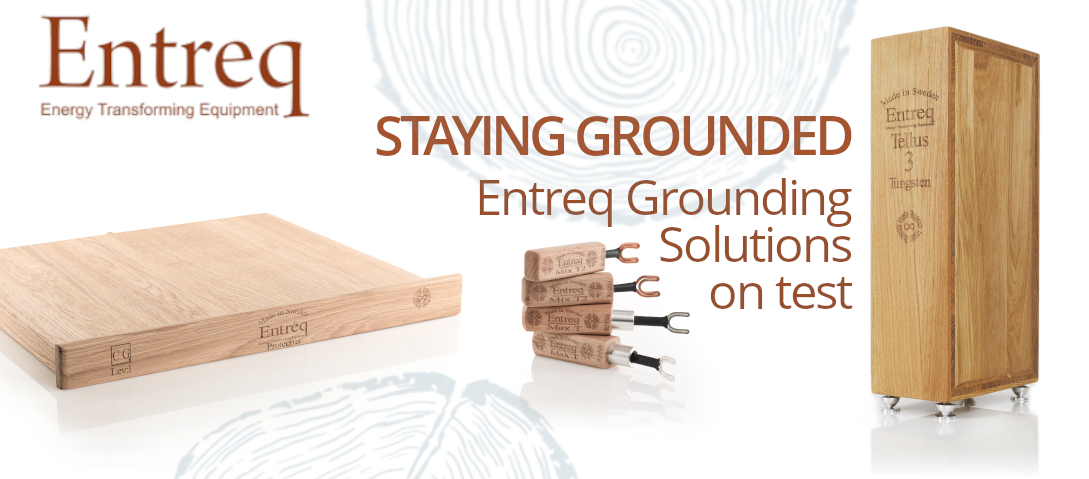
The main event was the Tellus 3 Tungsten Tri-Cell Ground Box, standing nearly a half-meter high, with the form factor of a gnome's coffin, next to our B&Ws (Entreq assured us there were no remains of a bearded homunculus contained therein). What is inside are three internal cells - a single-cell Olympus 10 T and two Silver Minimus Tungsten cells (collectively, over £700 dearer than the Tellus 3). The mineral mix in all three cells is the same and includes tungsten granules. But the Minimus uses copper connections and lacks the silver mesh chassis used in the Olympus 10 T.
The concept is elementary, my dear friends. Electronic noise is hopelessly attracted to the Earth – it takes the 'path of least resistance', and Earth is positively charged. Entreq grounding solutions offer a self-contained mass of specially formulated grounding material where your hi-fi dumps its noisy baggage – signal magnetism.
Also demonstrating was the new MaxMix Kit – a set of 4, wooden cheese fork-sized attachments for your speakers' terminals. The science behind these devices (without giving you a TED talk) is that they balance electricity, magnetism and vibration (each affects the other) generated within speaker cables. This is achieved with Entreq's special mineral blends. The 'Mix' attaches to positive terminals, and the 'Max' to negative terminals.
Last for demonstration was the heroically named Protectus. This wood-finish platform protects components placed on it from power grid magnetism (high-frequency noise generated by appliances on the power grid) and drains mechanical vibrations. With its smooth wooden block design, together with the cheese fork looking MaxMix kit, you might wonder why Entreq haven't included a wedge of Manchego cheese with a ramekin of real ale chutney. Still, this pairing takes care of something almost as palatable – your music.
On Test: Tellus 3
However, tastes in cheese are as diverse as tastes in music; we had an interesting conflict of tastes among the review team. Hezron chose Jon Bellion's Guillotine for our test track; Mark hated it, threatening to walk out of the demo. After Mark cringed his way through Bellion's angular production, The Tellus 3 was connected, the sound smoothed off, and Mark stayed for the rest of the session. Playing Myele Manzana's instrumental: Universal Language, helped calm the atmosphere.
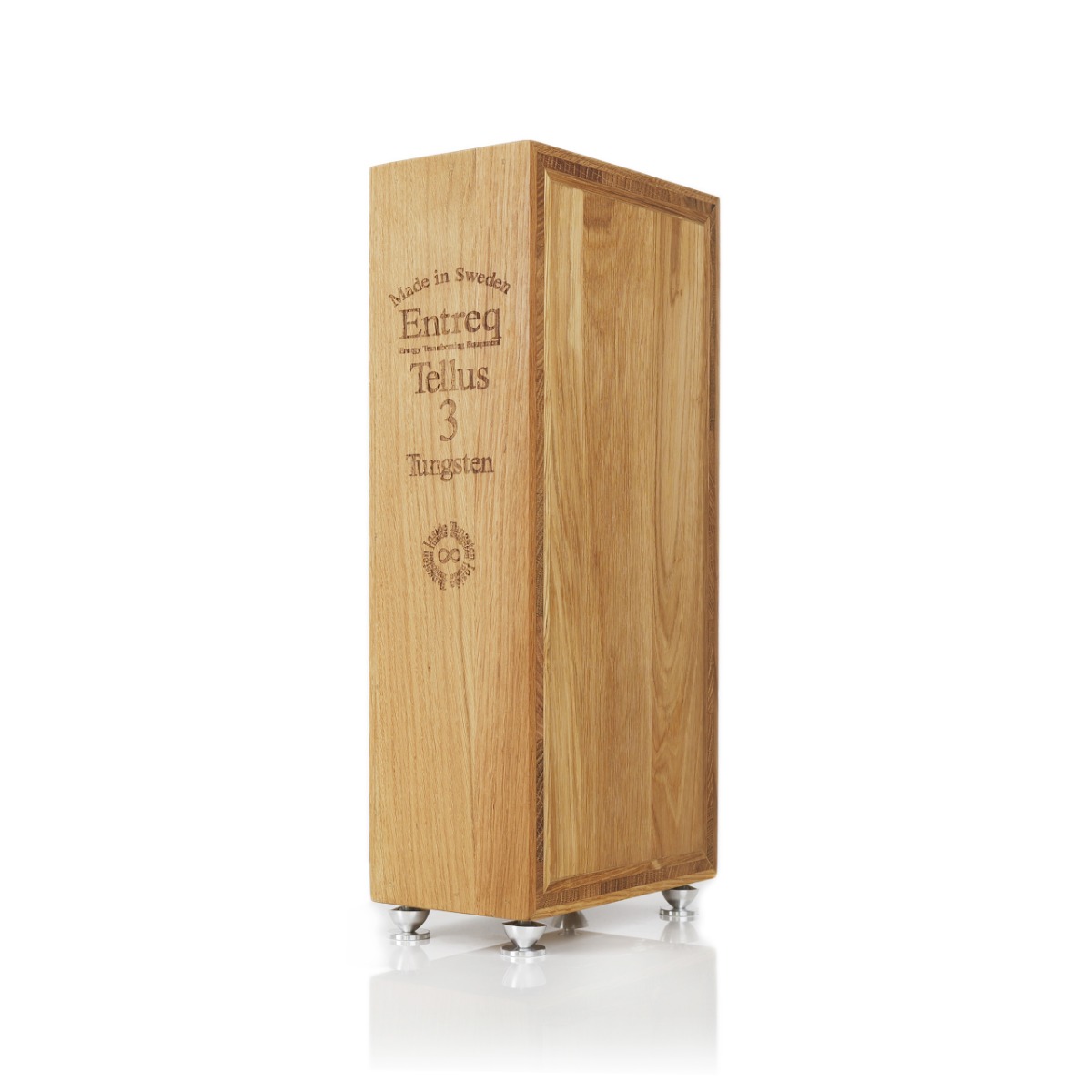
So, how did we connect the Tellus 3 to our system? There is a best practice. The power amp connects to the Minimus terminals (copper), and the preamp connects to the Olympus terminal (silver). We've sketched a connection diagram to help you understand.
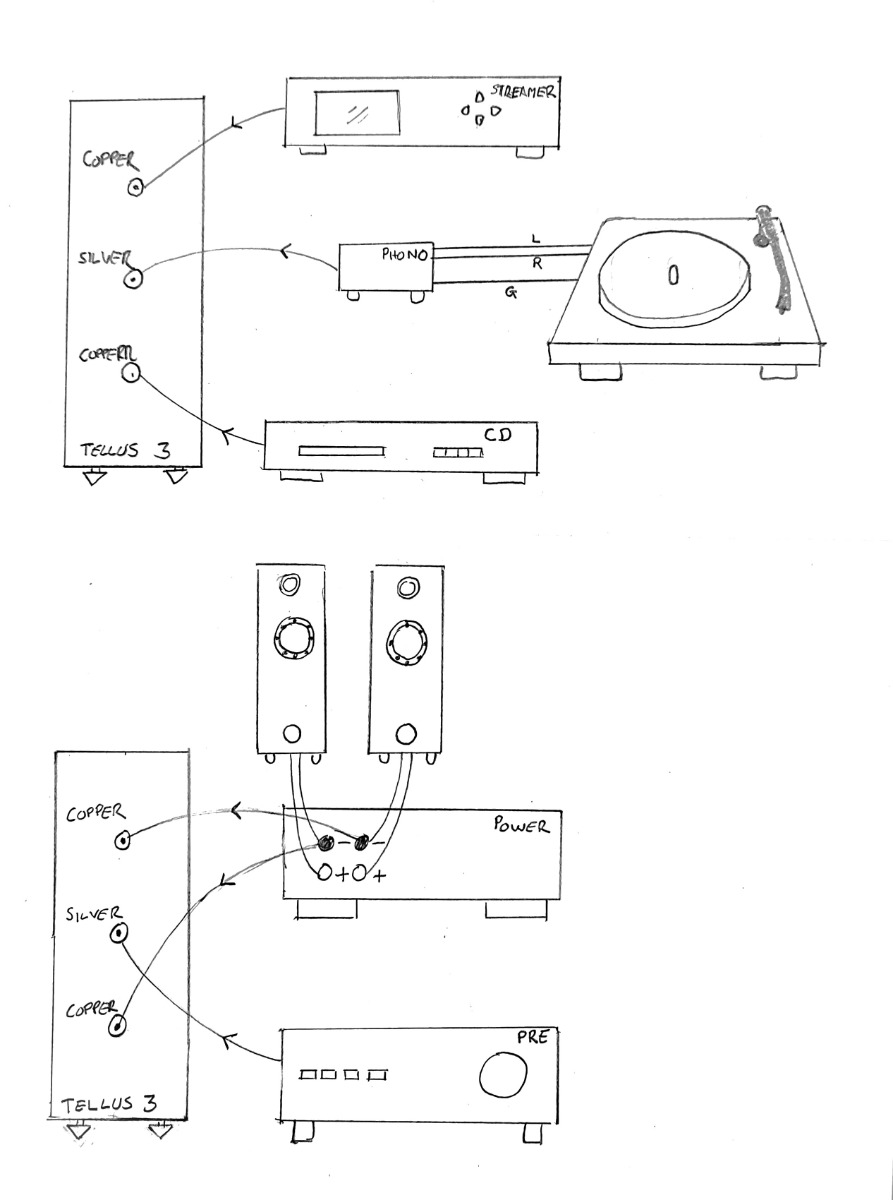
Importantly, we connected the power amplifier using the amp's negative speaker terminals to the two copper Minimus terminals, to begin (connecting to negative terminals drains away voltage before it returns to the amp from the speaker). The music became livelier and more vibrant – the percussive nature of the Bellion track, more defined.
The silver Olympus terminal was reserved for connecting the preamplifier. Preamplifiers tend to be the noisiest component in a system, more critical for lowering the noise floor with the better grounding terminal. Everything stepped up significantly more. Bass was more textured and defined. Myele's syncopated drumming was strikingly unsmeared, and the piano keys separated like well-faceted diamonds.
We should mention that connecting to Entreq boxes requires their dedicated grounding cables. We started with the midrange Revelation cables – good value. Trying the premium Olympus cables did give us more refinement, but we suggest these only for very high-end systems. Our setup doesn't warrant the price tag.
MaxMix
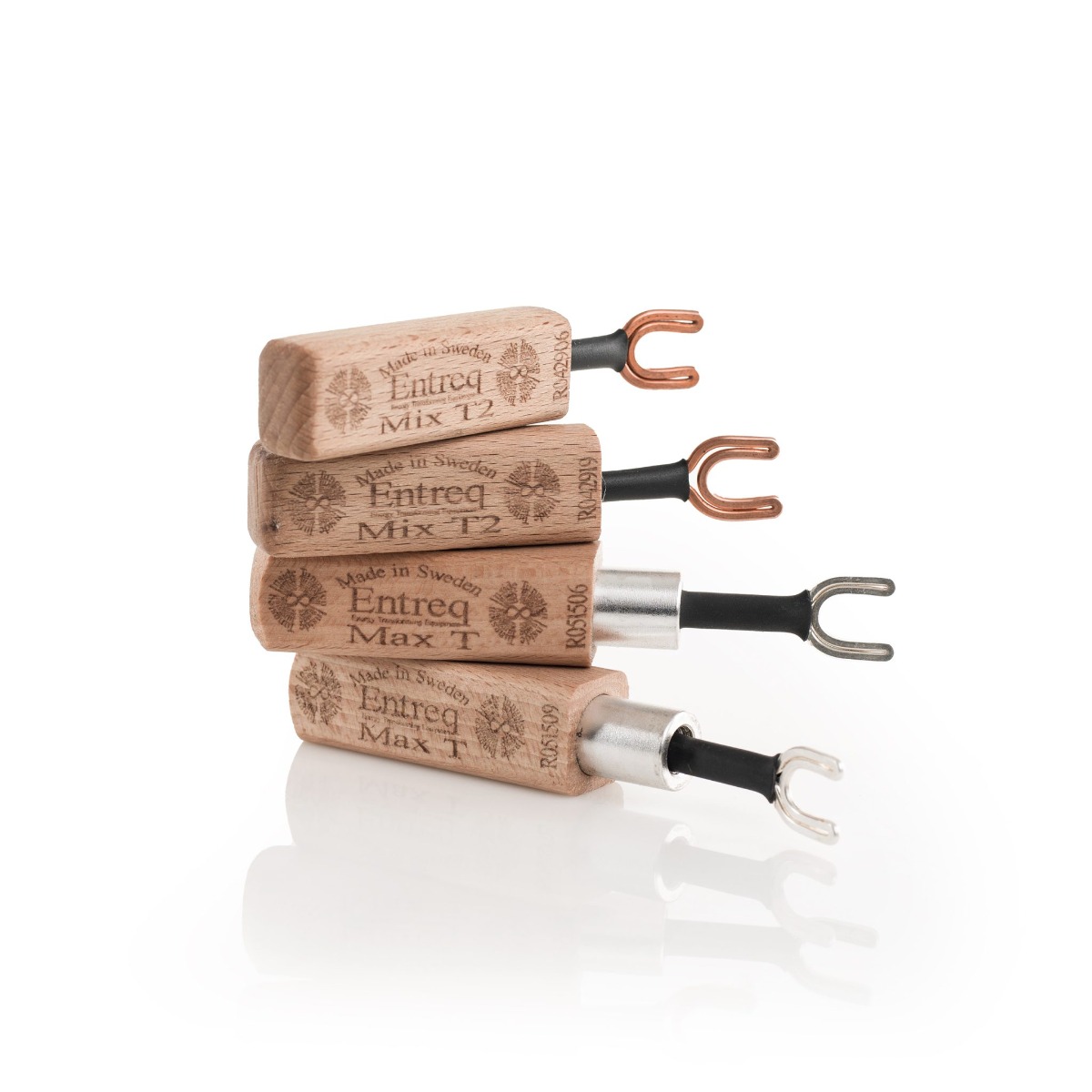
The MaxMix set was attached to each of our B&W 803 speakers (Power-hungry speakers will be noisier because of higher current draw, producing bigger magnetic fields). There are four – two for each speaker (our speakers are bi-wired, so we shared the MaxMix's spade connectors with the speaker cable's banana plugs). The sound was much smoother. We removed them, and the sound seemed harsher. We auditioned a selection of music since the MaxMix are rather curious little devices to hear if the effect was consistent. It pretty much was.
Protectus
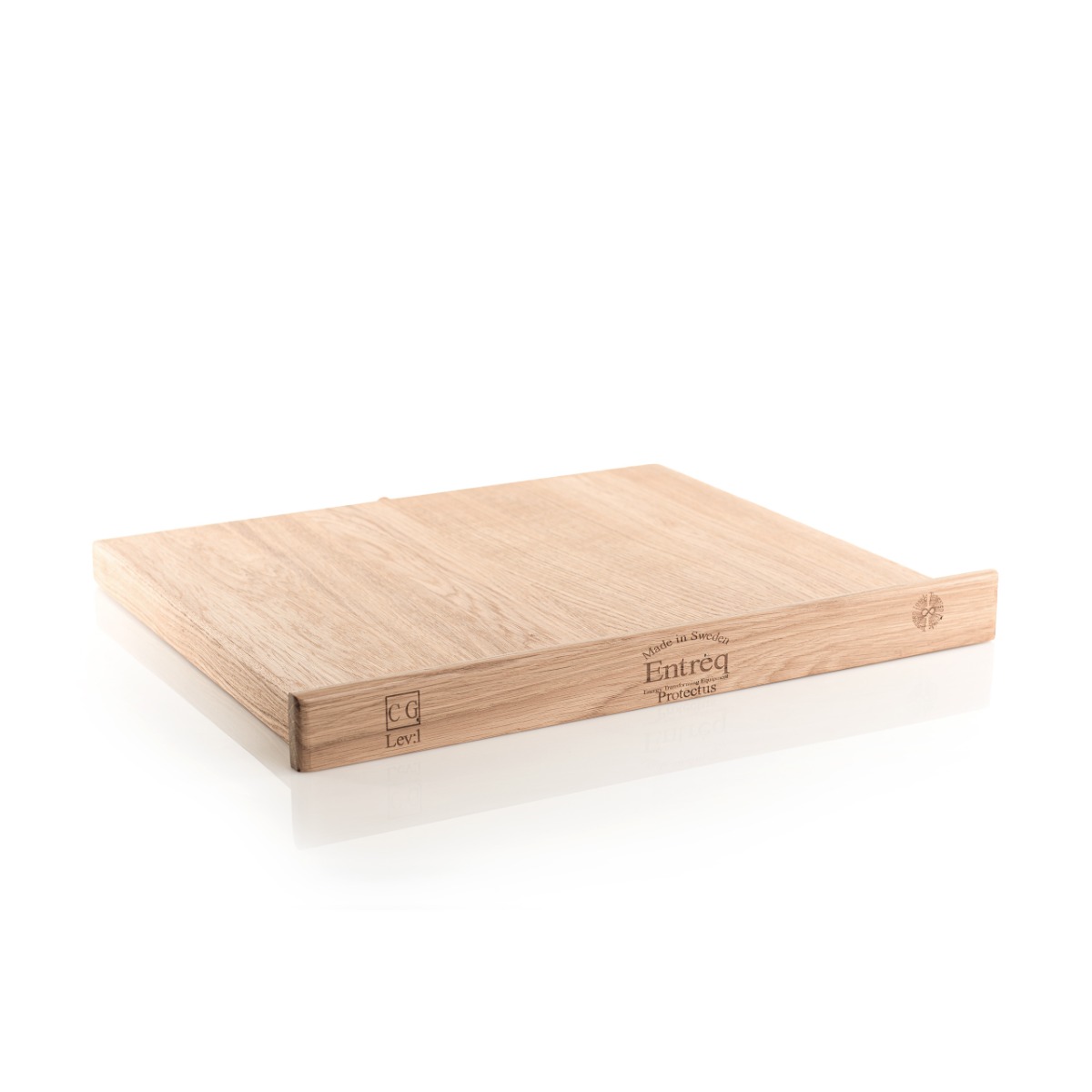
Entreq recommends pairing the MaxMix with the Protectus Shelf. Instead of an effluvious variety of cheeses, we placed our DAC on it. It might look like something you chop carrots on, but the Protectus can affect your components in two ways:
- The mixed metal spheres inside oppose magnetic fields within devices
- Connecting a device to its grounding post drains electronic noise.
Just placing the DAC on the Protectus, we heard a bigger, better separated presentation, though the effect was subtle. Connecting a Revelation grounding cable to a USB socket, the music was snappier. The transient detail improved, so leading edges became better defined – that's to be expected when mitigating EMI and RFI.
Conclusion
As Mr Entreq himself says, "Many manufacturers have realised over the years how important power is for sound quality. But almost all have focused on the phase. However, I have always believed that it is the ground and protective earth that is the big problem with poor power."
Entreq products are focused on the two types of magnetism that affect hi-fi setups: Power Grid Magnetism and Signal Magnetism. The products we tested addressed both types in different ways. These are new additions to the Entreq range, but the catalogue has solutions for many situations. If you decide on one, put the music on, take a glass of Malbec and a slice of Roquefort and enjoy a moment of clarity.
For listeners who want to understand how grounding fits into the broader picture of system power quality, our Upgrading Your Hi-Fi System: Power & Grounding guide covers the subject in depth, including where the Tellus 3 sits within a wider system upgrade strategy. If you are weighing up isolation accessories more broadly, our TCI Podium review looks at mechanical vibration isolation as a complementary approach.
All three Entreq products are backed by FutureShop's 60-day money-back guarantee, so you can evaluate them in your own system with no risk.
The Entreq Tellus 3 and MaxMix T2 are available now at FutureShop, backed by our 60-day money-back guarantee. Not sure which Entreq solution suits your system? Get in touch with our team. As an Entreq reference dealer since 2015, we are happy to help.