FutureShop's technical team has put together these speaker positioning tips based on common mistakes we see when customers contact us for system advice. They apply equally to stereo hi-fi and home cinema setups, and cost nothing to implement.
The Short Version
Whether you have a £100 pair of speakers or a £1,000 pair, where you position them matters more than almost any other variable. Good positioning is free. A speaker placed incorrectly will underperform regardless of how much you paid for it or what cables you connect to it. The quick reference table at the end of this guide gives you all eight rules in one place to save and use.
Quick Take: Eight Rules at a Glance
- Speakers face the length of a rectangular room, positioned in the first third.
- More than 1m from all side walls.
- 60 degrees apart for stereo; 110 degrees for surround side speakers.
- Avoid the 1m to 2.2m zone from the rear wall in large rooms.
- Subwoofer at least 30cm from a corner; not centred on a wall.
- Tweeter at ear height (above 1.2m) when seated.
- Desktop speakers on foam or isolation pads to prevent desk resonance.
- Surround speakers equidistant from listening position, forming a circle.
How to Position Speakers Correctly
Whether you have a £100 speaker or a £1,000 pair, where you position them in a room is critically important. Good positioning costs nothing and unlocks performance that no cable or amplifier upgrade can compensate for if the basics are wrong. Here are eight rules that cover the most common positioning mistakes and how to correct them.
Room Orientation
If your room is rectangular, the speakers should face along the length of the room, not across the width. Place your listening position against the shortest wall and have the speakers project down the long axis. This gives the sound more room to develop before it reaches the back wall, reducing early reflections and improving bass clarity.
Think in Thirds
Divide the length of your room into three equal sections in your mind. Your speakers belong in the first third of the room from the listening end, and no closer than 1m from either side wall. This positioning reduces the effect of side-wall reflections on the stereo image and prevents bass energy from building up excessively in room corners. It requires space, but the improvement over corner placement is significant.
Speaker Angles and Stereo Image
Music is recorded and released in stereo, which spreads sound between two channels. The speakers should be angled inward, toward the listening position, at approximately 60 degrees apart. The simplest way to set this accurately is to place a small marker at your listening position and measure the angle from there. When correctly set, instruments and voices appear to exist in the space between the speakers rather than at the speakers themselves. This is the stereo image, and correct toe-in angle is one of the most effective ways to sharpen it.
Distance from the Rear Wall
Distance from the rear wall affects bass response significantly. In a large room where the speakers can be pulled well forward, there is a zone between 1m and 2.2m from the rear wall that tends to produce uneven bass due to room modes at those distances. Aim to be either closer than 1m or further than 2.2m from the rear wall. In a smaller room where this is not achievable, keep as much space as possible between the speaker and the wall, and avoid pushing speakers flush against it. Rear-ported speakers are particularly sensitive to this: the closer to the wall, the more the bass port reinforces low frequencies, which can make bass sound boomy and indistinct.
Subwoofer Placement
A subwoofer placed in a corner will have its output reinforced by both adjacent walls, producing exaggerated and uncontrolled bass. Keep it at least 30cm from any corner. Equally, do not place it in the exact centre of a wall, as this position aligns with a room mode at the fundamental frequency and produces a similarly uneven result. A position one third of the way along a wall from a corner is a reliable starting point. The subwoofer's crossover point and volume should then be set to blend with the main speakers at the listening position.
Speaker Height and Tweeter Alignment
If you are using speaker stands, adjust the height so that the tweeter is at ear level when you are seated in your listening position. Above 1.2m is a useful reference. The tweeter, the smaller driver that handles high frequencies, projects sound in a narrow, near-straight line. If it is pointed above or below your ears, you will lose the top-end detail and the sense of air and shimmer that well-recorded music contains. Getting this right makes more difference to the perceived clarity of music than almost any cable change.
Desktop Speakers
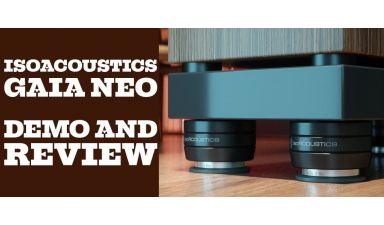
Desktop speakers placed directly on a desk will cause the desk surface to resonate sympathetically, adding its own bass colouration to the sound. Resting the speakers on foam, rubber pads, or dedicated isolation feet decouples them from the desk surface and removes that unwanted resonance. The IsoAcoustics Gaia and Orea ranges are purpose-designed for exactly this application. The improvement is immediate and consistent.
Surround Sound Speaker Placement
For surround sound setups, the centre channel speaker sits directly in front of the listening position on the same horizontal plane as the left and right speakers. Side surround speakers are placed at 110 degrees to each side, following the same rules about height and toe-in as the main stereo speakers. All speakers should be equidistant from the listening position, ideally forming a circle. When surround distances are correctly matched, directional audio effects such as overhead sound design in film become clearly positional rather than simply loud.
Conclusion
Not every rule will be achievable in every room. Furniture, windows, and room shape all impose constraints. But the foundational rules (out of corners, in the first third, tweeter at ear height) will produce a meaningful improvement in almost any room without any cost. Get these right first, then consider cable and accessory upgrades. A well-positioned speaker on decent cables will outperform a poorly positioned speaker on expensive ones every time.
When you are ready to look at the cable side of the equation, our guide to keeping to one hi-fi cable brand covers how a matched speaker cable loom compounds the positioning work you have done here. And for isolation accessories to sit your speakers on, our must-have accessories guide covers both the Oehlbach isolation range and the Nordost Sort Kones.
Speaker Positioning Quick Reference
Save this table as a reference for any future speaker placement or room change.
| Rule | Target | Common mistake | Effect of getting it wrong |
|---|---|---|---|
| Room orientation | Speakers face the length of the room | Speakers placed across the width of a rectangular room | Excessive early reflections, bass build-up, reduced soundstage |
| Room thirds | Speakers in first third of room; more than 1m from side walls | Speakers pushed into corners to save space | Bass reinforcement from corner, poor stereo separation |
| Toe-in angle (stereo) | 60 degrees apart, angled toward listening position | Speakers pointing straight forward, parallel to the walls | Diffuse, unfocused stereo image; instruments do not appear between speakers |
| Rear wall distance | Less than 1m or more than 2.2m from rear wall | Landing in the 1-2.2m problem zone; rear port against the wall | Uneven bass response; boomy or thin low end |
| Subwoofer | At least 30cm from any corner; not centred on a wall | Sub placed in corner for convenience | Exaggerated, indistinct bass due to corner reinforcement |
| Tweeter height | Tweeter at ear height when seated; above 1.2m | Stand height not adjusted; tweeters aimed above or below ear level | Loss of high-frequency detail and air; music sounds flat or harsh depending on angle |
| Desktop placement | Speakers on foam or isolation pads, not directly on desk | Speakers placed directly on desk surface | Desk resonates, adding unwanted bass colouration to the sound |
| Surround placement | Centre direct front; sides at 110 degrees; all equidistant from listening position | Surround speakers at unequal distances or wrong angles | Directional effects sound localised and unnatural rather than immersive |
Once your positioning is dialled in, the next step is making sure your speaker cables are not limiting performance. Browse our full speaker cable range or get in touch with our team for free expert advice on both positioning and cable upgrades tailored to your specific room and system.