FutureShop is an authorised dealer for English Electric, a brand produced by Chord Company. This review was conducted using a Bluesound Node streamer, Chord Mojo DAC, and Marantz SR7015 AV receiver as the test system.
Our Verdict
The English Electric EE1 is a compact, passive, and genuinely effective network noise isolator that delivers a livelier, more forward streaming presentation on a mid-level system. It is one of the most cost-effective single upgrades available for any streaming setup where the network is an untreated noise source, and the improvement is immediate and reversible.
Quick Take
- The EE1 uses two passive technologies in series: a chip that filters low-frequency noise, followed by an impedance-optimised common mode filter that removes higher-frequency interference. It works like a speaker crossover but for network data.
- It is self-powered: unwanted noise energy is converted to heat within the unit. No external power supply is required.
- Place the best Ethernet cable you own on the output side (between the EE1 and your streamer), not the input side. The C-Stream cable included in the box is best used here.
- Multiple EE1 units can be used at different points in your network for cumulative noise reduction: for example, one between the router and switch, and another between the switch and streamer.
- On our Bluesound Node/Chord Mojo test system, the EE1 produced clear improvements in soundstage separation, transient articulation, and bass solidity on a challenging acapella recording.
- The EE1 Plus adds galvanic isolation, ARAY technology, and precision-machined aluminium with decoupled isolation feet for a further step. See the upgrade guide below for a direct comparison.
Introducing the English Electric EE1 Network Noise Isolator: Beyond the Ordinary
Although English Electric might sound like a post-war factory building radio equipment made from Bakelite (some might welcome another retro redux), the products Chord Company's side hustle is fabricating are much more tuned into the modern world.
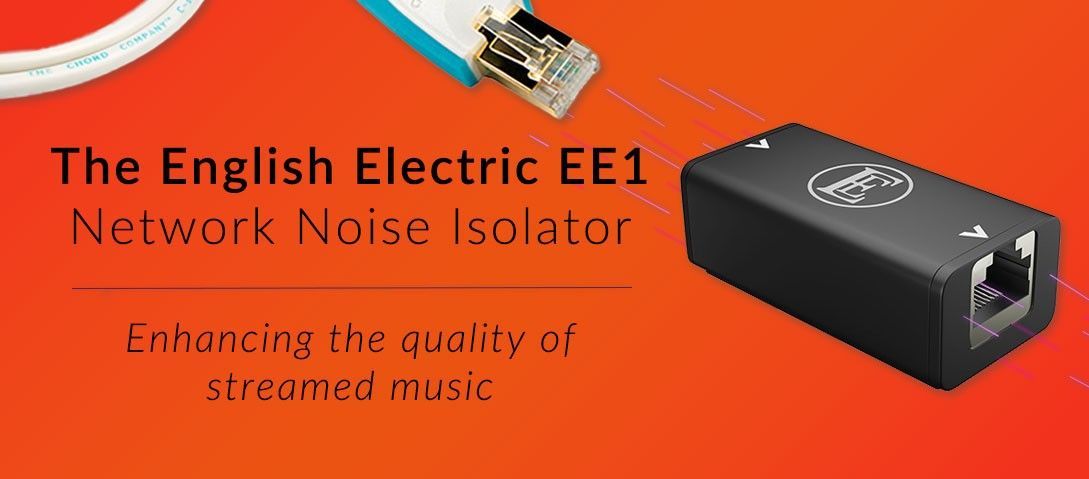
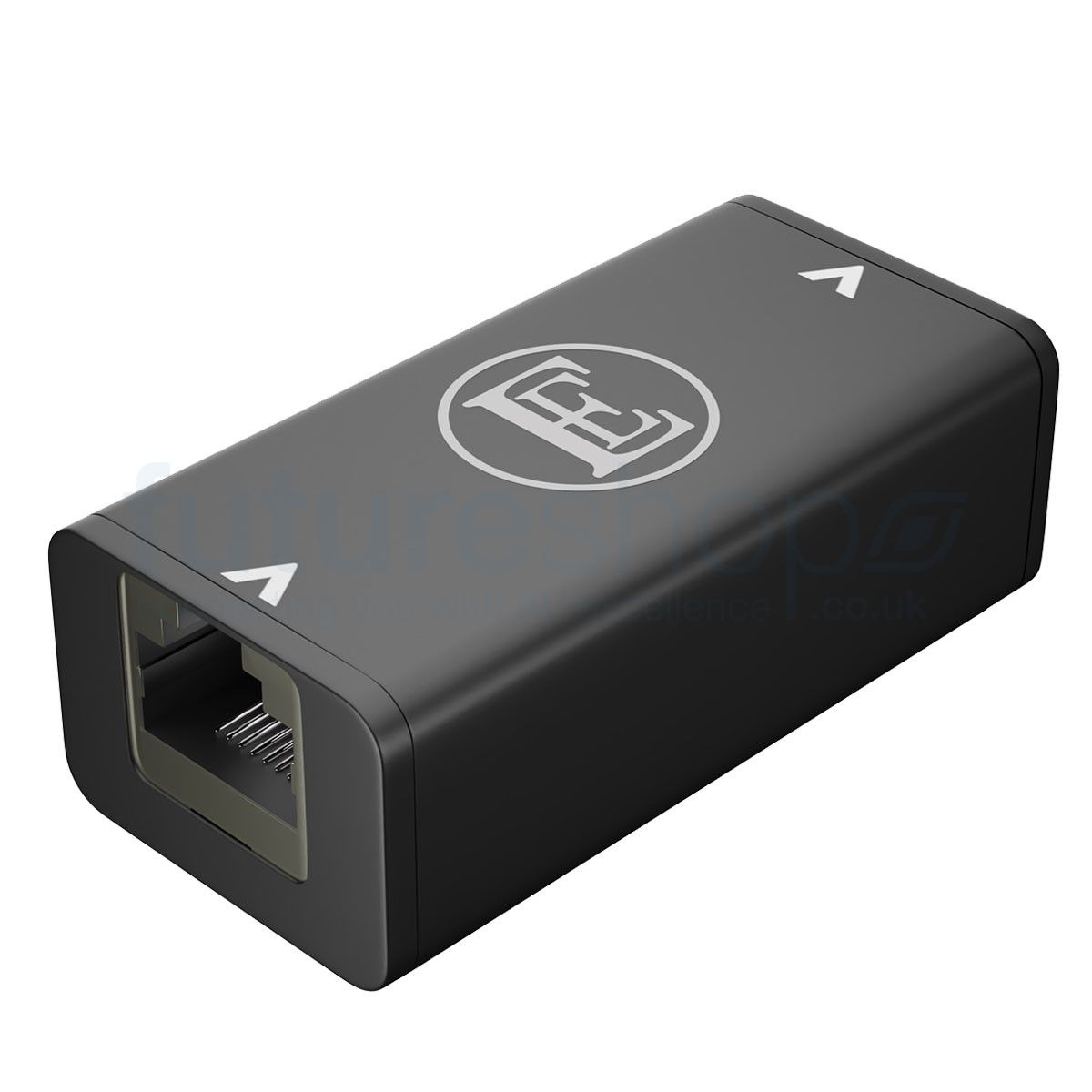
The EE1 Network Noise Isolator is the next piece in English Electric's line of audio-grade network products. But this is not another network switch; it's a 'high-performance network noise isolator'. Let's explain . . .
Advanced Technology: How EE1 Enhances Your Audio
The approach English Electric applies involves two passive technologies. The chip filters off low-frequency noise while the EE1, via an impedance-optimised common mode filter, removes higher-frequency interference. It effectively 'top and tails' the hash from the data passing through – not unlike the crossover in a speaker. Data is handled by rearranging word length (bit depth), so less error correction is employed by the receiving device – such as a streamer.
It's worth noting that a better-quality Ethernet cable – like the supplied Chord C-Stream – is best placed from the EE1's output rather than to its input.
Design and Practicality: The EE1's Unique Build
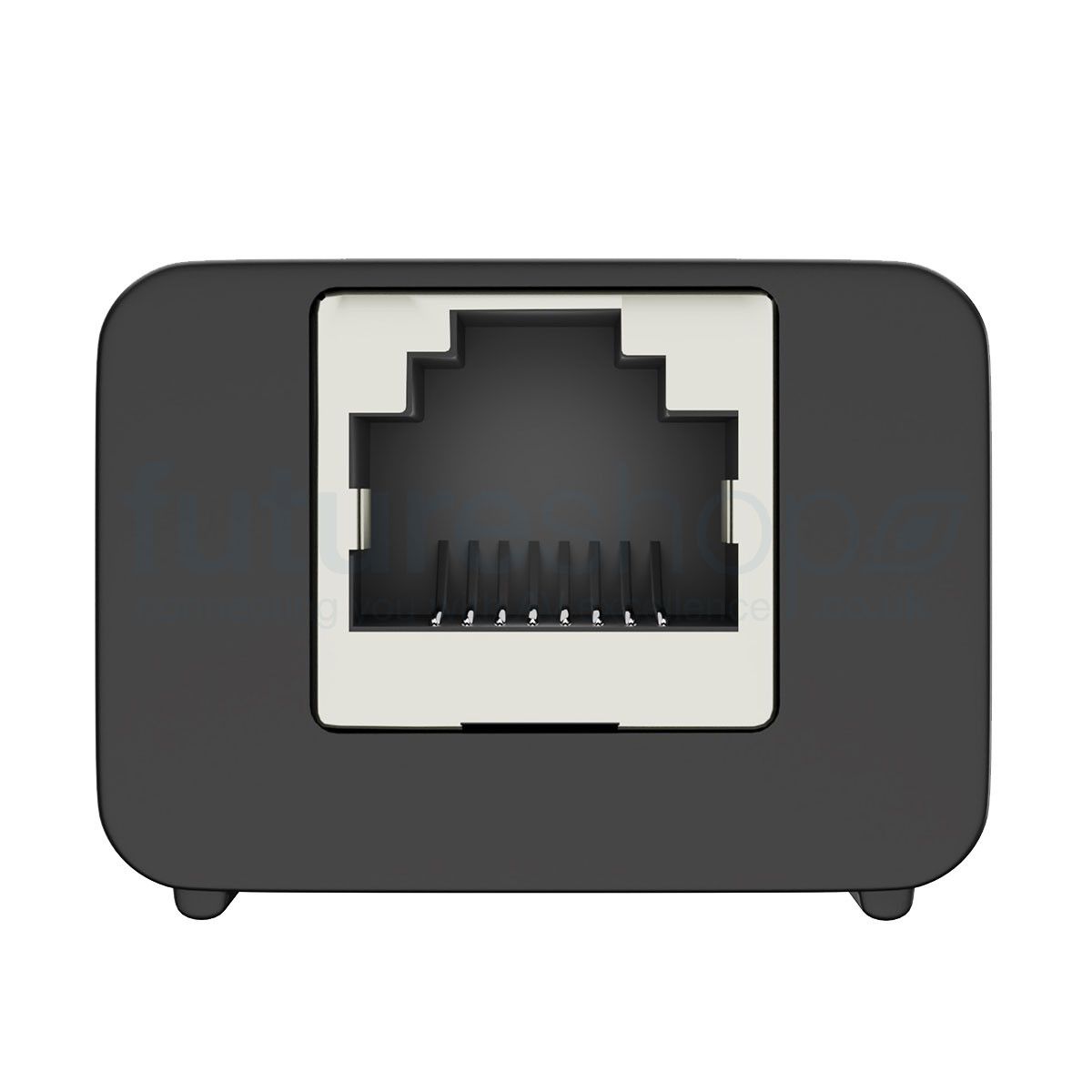
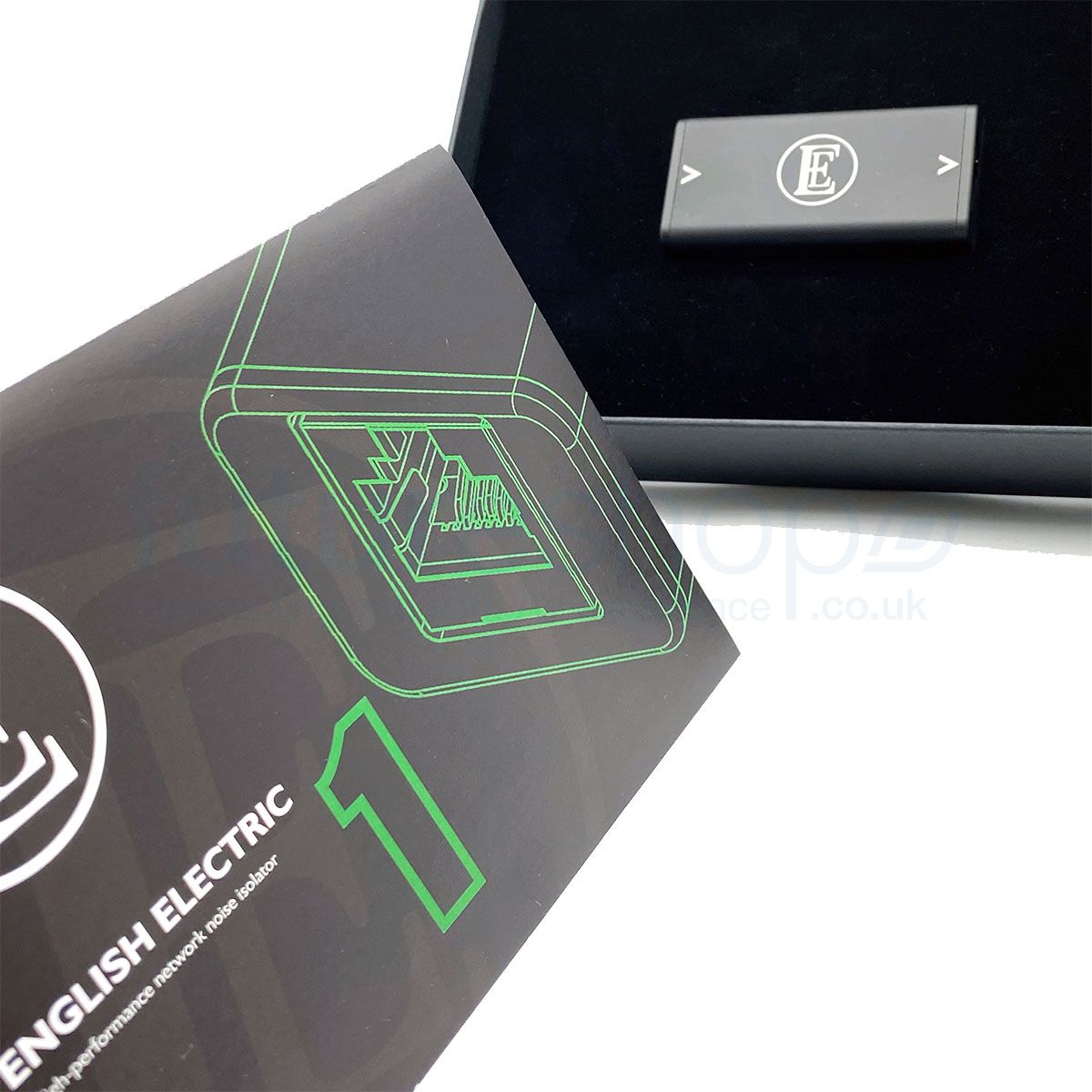
At first, we wondered why the unit was designed without an RJ45 connector to plug directly into your streaming device, but its relative heft makes it more practical and robust with this throughput design. Its aluminium casework with the English Electric logo, we gather, shields from microphony and external electronic noise. The underside rubber rails are a nice touch to keep it rested on a surface. However, they were superfluous in our case since the stiffness of the bundled 0.75m Chord C-Stream cable held it suspended inoffensively behind our equipment shelf.
Real-World Testing: EE1's Impact on Sound Quality
But really? Does a little block that takes 1s and 0s through it from the internet make our music sound better? It seems to work.
We had our EE1 in between the router and a Bluesound Node on our test system comprising a Chord Mojo and Marantz SR7015. Actually, it didn't just work; its performance truly surprised us. We gave the little box a challenging test using Club for Five's beautifully recorded version of Brothers in Arms.
Impressive Results: The EE1's Audible Difference
The multi-layered acapella track recorded with deep reverb allowed the EE1 to do its job with sound staging. The layers of choral voices were clear, separated and able to shine while the lead baritone voice's texture kept afloat on top of the mix. The distant pulses, sounding like cannon shots, had the subtlety of decay to suggest their distance, and as the chorus built into the deep bass tone, the impact was solid. Overall, the EE1 network noise isolator gave our music a livelier, more forward presentation.
EE1 Setup, Placement, and Upgrade Path: A Practical Guide
The review above covers what the EE1 does and how it sounded in our test setup. This section answers the three questions we hear most often from customers considering a purchase.
Where should I place the EE1 in my network?
The EE1 is most effective placed close to the streaming device, not at the router. Position it between your network switch and your streamer, or between your router and streamer if you have no switch. The closer to the streamer, the more directly its noise reduction benefits the device generating the audio signal. A quality Ethernet cable from the EE1's output into the streamer is more important than the cable on the input side: the C-Stream bundled with the unit is rightly placed here. For the input side, any decent shielded cable will do.
Can I use more than one EE1?
Yes, and the improvement is cumulative. A second unit placed between your router and network switch tackles noise at an earlier point in the chain, before it can propagate through the rest of the network. A typical two-unit configuration: one EE1 between router and switch, one between switch and streamer. The EE1 is self-powered (it converts noise to heat), so adding a second unit requires no additional power supply or configuration.
How does the EE1 Plus compare to the EE1?
| EE1 | EE1 Plus | |
|---|---|---|
| Low-frequency noise filtering | Yes (chip filter) | Yes (galvanic isolation, more comprehensive) |
| High-frequency noise filtering | Yes (common mode filter) | Yes (common mode filter plus ARAY technology) |
| Galvanic isolation | No | Yes. Fully breaks the electrical connection between input and output for maximum noise rejection. |
| ARAY technology | No | Yes. The same passive reflection-attenuation technology Chord applies to its signal cables. |
| Casework and isolation | Aluminium with rubber rails | Precision-machined thick-walled aluminium with decoupled isolation feet |
| Best suited to | Mid-level streaming systems as an entry-level network noise upgrade. The most cost-effective first step. | High-end systems where the EE1 has already been tried and a further step is warranted, or as a single higher-performance unit. |
Final Thoughts: Elevating Streaming Music with EE1 Network Noise Isolator
In conclusion, the English Electric EE1 network noise isolator offers a nuanced improvement to your streaming experience. By effectively filtering out a significant portion of network noise, it allows for a cleaner, more refined sound. This device subtly enhances the quality of streamed music, providing a more enjoyable and immersive listening experience. While it may not dramatically transform your system, the EE1 reliably elevates the audio to a higher level of clarity and detail, bringing a touch of sophistication to your daily music enjoyment.
If you are interested in the broader context of network noise isolation and how fibre optic isolation compares to the EE1's passive filter approach, our ADOT fibre optic kit review covers the stepped copper-to-fibre conversion in a listening comparison. And if you are starting from the beginning of the network upgrade path, our essential guide to Ethernet cables for hi-fi streaming covers the cable quality decisions that sit between the EE1 and your streamer.
The English Electric EE1 and EE1 Plus are available now at FutureShop. To complete the chain with a quality output cable, browse Chord Ethernet cables, all backed by our 60-day money-back guarantee on cables. Not sure whether the EE1 or EE1 Plus suits your system, or how many units to use? Get in touch with our team for free expert advice.