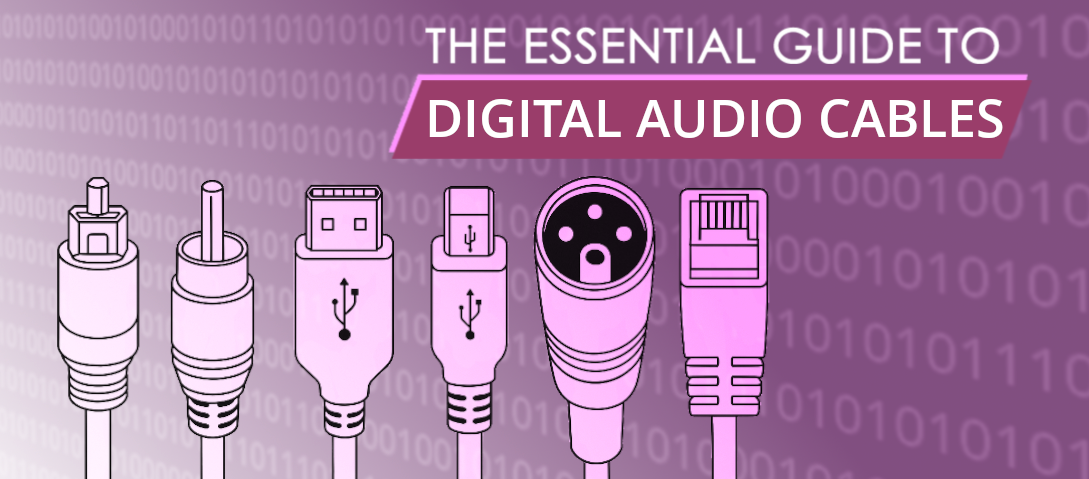
Digital Audio

Optical TOSLINK, coaxial S/PDIF and AES/EBU cables for connecting CD transports, televisions, streamers and DACs.

167 products Award Winning Dealer Since 2013 Free expert consultation

Optical, coaxial or AES/EBU?

All three carry the same digital audio, and the right one is usually decided by the sockets on your equipment. Where you do have a choice, the differences come down to bandwidth, electrical isolation and impedance.

Optical TOSLINK passes light rather than electricity, so it breaks any earth connection between components. That makes it useful for televisions and for systems with a hum problem, at the cost of a bandwidth ceiling that limits it at higher sample rates. Coaxial S/PDIF handles higher rates and keeps a direct electrical link, which usually means better timing but also a shared earth path. AES/EBU on XLR is the balanced professional standard and appears on higher end transports and DACs.

Impedance matters here. Coaxial digital cable is 75 ohm and AES/EBU is 110 ohm, and using a standard analogue interconnect because the plug happens to fit will cause reflections and timing errors. Where your equipment gives you the choice, the practical test is to try both in your system, and the 60-day money-back guarantee makes that straightforward.

4.95/5 from 20,731+ reviews Award Winning Dealer Since 2013 UK Specialist since 2005

157 of 157 products

Now Shopping by New Clear all
  • Blustream OPT Toslink Digital Optical Audio Cable
    NEW

    Blustream

    Blustream OPT Toslink Digital Optical Audio Cable

    SKU: Blustream OPT

    From
    £12.49
    Ex. VAT
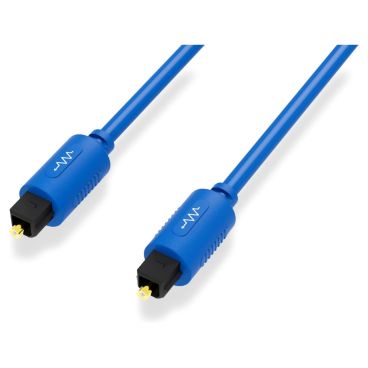
    The Blustream OPT is a Toslink digital optical audio cable with a plastic optical fibre core of acrylic glass, 24K gold plated connectors and an ultra flexible design, in 1m, 2m and 3m lengths.
    View Available Worldwide Shipping Available

Not finding what you need?
Our experts can help narrow it down for your exact system.
Ask an Expert →

Absolutely. Chord’s digital and streaming cables are built with the same performance goals as their analogue range. Options like the C-stream, Shawline Streaming or Epic USB are designed to minimise noise and jitter, allowing your streamer or DAC to operate more efficiently and reveal more of the music. Customers often report tighter bass, clearer imaging and improved timing.

Coaxial S/PDIF uses RCA or BNC connectors with 75-ohm impedance, while AES/EBU is balanced and uses XLR connectors with 110-ohm impedance. AES/EBU typically offers better noise rejection for professional and high-end systems.

Optical TOSLINK cables are ideal for preventing ground loops and electrical interference since they use light transmission. Coaxial cables, however, often deliver a slightly more robust and detailed sound.

Yes, but not in the same way as analogue cables. High-quality digital cables minimise jitter and ensure stable signal transfer, preserving timing accuracy and reducing noise.

Yes. Both coaxial and AES/EBU cables can handle 24-bit/192kHz audio, while optical cables may be limited to 24-bit/96kHz depending on the device.

Using a true 75-ohm coaxial digital cable maintains impedance consistency and reduces signal reflections that can introduce jitter and distortion.

Loading...
Loading...
loader
Loading...