Power Cables

Mains leads in IEC C13, C15, C19 and Figure 8, with most available made to order in the length you need. Usually the first power upgrade people make.

194 products Award Winning Dealer Since 2013 Free expert consultation

Choosing a mains cable

Start with the connector. Your equipment takes one of four inlets. C13 is the standard kettle style socket, C15 is the notched high temperature version used by some amplifiers, C19 is the larger high current type on bigger power amplifiers, and Figure 8 is the small two pin fitting on lighter source components. The wrong one will not fit, so check the back of the unit before ordering.

Current capacity comes next. A power amplifier draws far more than a DAC or a streamer, and a cable designed for a source component can restrict a large amplifier on dynamic peaks. Where a manufacturer specifies a minimum, follow it.

On what to expect: changes here are usually described as a lower noise floor and better dynamic control rather than a shift in tonal balance, and they tend to be clearest on amplifiers and on digital sources with switching supplies. It is also the area of hi-fi where the gap between claim and result is widest, which is exactly why the 60-day money-back guarantee matters here. Put one on your amplifier and decide for yourself.

4.95/5 from 20,728+ reviews Award Winning Dealer Since 2013 UK Specialist since 2005

1 of 1 products

Now Shopping by New Gold Clear all
  • Tellurium Q

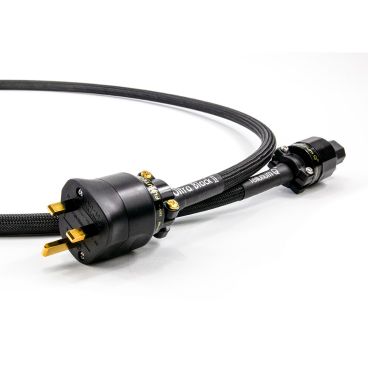
    Tellurium Q Ultra Black II Mains Power Cable

    SKU: TQ Ultra Black II Mains

    From
    £1,575.00
    Ex. VAT
    The Ultra Black II power cable might be a replacement for the Ultra Silver power cable, but its sonic signature fits firmly within the profile of the Ultra Black family - meaning a neutral, well-resolved and coherent sound with much higher performance than the Black II.
    View Available

Not finding what you need?
Our experts can help narrow it down for your exact system.
Ask an Expert →

Yes. Upgrading power cables can significantly improve system performance, even more so when using components sensitive to noise. AudioQuest power cables are designed to reduce radio-frequency and electromagnetic interference (RF/EMI), stabilise current delivery, and improve the noise floor of your system. Many customers report noticeable gains in detail, dynamics, and overall tonal balance, especially when paired with AudioQuest Niagara power conditioners.

Yes. Supra LoRad power cables are specifically engineered to minimise electromagnetic interference (EMI) and radio frequency interference (RFI). By reducing the noise that can be picked up by audio components, LoRad cables help lower background hum and improve overall system clarity. Many listeners find they deliver a cleaner, more dynamic sound with greater focus across the frequency range.

Absolutely. IsoTek power cables are designed with advanced shielding and high-quality conductors to reduce electromagnetic interference and optimise current delivery. Upgrading to an IsoTek EVO3 Premier or EVO3 Sequel cable is one of the simplest ways to improve performance.

Yes. Even adding one Shunyata power cable to a key component (like a DAC, streamer, or amplifier) can reveal more detail, reduce harshness, and improve timing. Many listeners choose to upgrade step by step as the improvements are cumulative.

Yes. Longer cables or high-current components benefit from thicker conductors (e.g., 2.5mm² or 12AWG) to maintain low resistance and voltage stability.

Standard power cables are designed to meet safety regulations at low cost, not to optimise audio performance. Upgraded power cables use higher-quality conductors, improved shielding, and better connectors to reduce interference and improve current delivery.

In resolving systems, this can result in clearer detail, improved dynamics, and a more stable soundstage. While the effect varies by system, power cables often become more beneficial as the overall quality of the equipment increases.

Clean mains power matters to both digital and analogue systems, but in different ways. Digital equipment can be affected by electrical noise that impacts timing, clarity, and perceived smoothness. Analogue equipment, especially turntables and phono stages, is sensitive to noise and interference that can mask low-level detail.

Improving power quality can help systems sound more composed, quieter, and more consistent. The more revealing the system, the more noticeable the benefits of cleaner power tend to be.

For most systems, speakers, headphones, and core electronics deliver the biggest initial improvements. Power upgrades are usually most rewarding once the system fundamentals are already strong.

That said, if you are experiencing noise, hum, or inconsistency, addressing power can bring immediate benefits. Power upgrades work best as part of a wider system approach rather than as a standalone fix.

All cables matter, and your system will require good quality cables for all of it's connections, however, if you were looking for the cable which will make the biggest difference, then we would recommend looking at the power cables from your wall socket, to your distribution block and/or amplifier. More often than not, we hear from customers, manufacturers, and our own tests that higher quality power cables can have a significant impact of the quality of your system.

Loading...
Loading...
loader
Loading...