XLR Balanced
Balanced XLR interconnects for equipment with true balanced circuitry, and for runs where noise rejection matters more than cable length.
Shop by Brand
When balanced is the right connection
A balanced connection carries the signal twice, once inverted, and the receiving component cancels anything common to both. Noise picked up along the run disappears in that cancellation, which is why XLR is standard in studios and why it holds up over long distances.
The benefit depends on the equipment rather than the cable. Where both components are balanced from input to output, XLR usually gives a lower noise floor and often a slightly different tonal balance from the same manufacturer's RCA equivalent. Where one component simply provides an XLR socket on a single-ended circuit, the advantage largely disappears and RCA may be the better connection. Check the manual or ask the manufacturer if you are unsure.
XLR also carries a higher output level on most equipment, so expect to use less volume for the same loudness. Cables here can usually be made to order in the length you need with no making charge, and burn-in is available free on request. Comparing XLR against your existing RCA run in your own system is the only test that settles it.
-
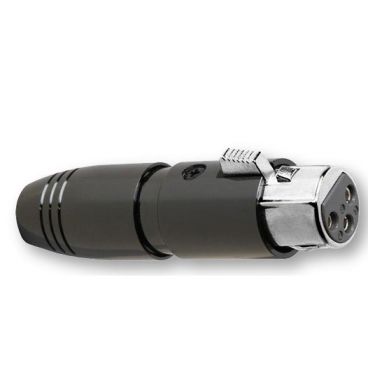
 £82.50Ex. VATAudioQuest's top of the range Premium XLR connectors for the ultimate signal transfer.